Mastering Multi-Site AVoIP Deployments: A Comprehensive Guide
Discover strategies for successful multi-site AVoIP deployments in distributed enterprise networks. Learn about network architecture, codec selection, bandwidth optimization, and centralized management for scalable and reliable AV over IP systems.
Micha van der Stoop

Mastering Multi-Site AVoIP Deployments: Strategies for Distributed Enterprise Networks
Enterprise organizations with geographically distributed locations face unique challenges when implementing Audio Visual over IP solutions. Unlike single-site installations where network infrastructure remains under unified control, multi-site deployments must account for varying bandwidth availability, different network architectures, and the complexity of managing AV assets across multiple physical locations. The strategic approach to these deployments determines whether organizations achieve seamless collaboration or struggle with fragmented, underperforming systems.
Successfully deploying AVoIP across distributed enterprise networks requires careful consideration of network topology, codec selection, latency management, and centralized control strategies. This comprehensive guide explores proven methodologies for implementing scalable, reliable multi-site AV over IP systems that deliver consistent performance regardless of geographic distribution.
Understanding the Unique Challenges of Distributed AVoIP Architecture
Multi-site AVoIP deployments introduce complexity that single-location installations simply do not encounter. When video and audio streams must traverse wide area networks, organizations must contend with variable latency, bandwidth limitations, and potential packet loss that can significantly degrade the user experience. Understanding these challenges forms the foundation for developing effective mitigation strategies.

The primary challenge involves bandwidth management across WAN connections. While local area networks typically provide gigabit or faster connectivity, WAN links between sites may offer significantly less throughput. A 4K60 uncompressed video stream requires approximately 12 Gbps, making compression essential for inter-site transmission. Organizations must carefully select codecs that balance visual quality with bandwidth efficiency, considering factors like motion content, color depth requirements, and acceptable latency.
Latency accumulation presents another significant concern. Each network hop between sites adds processing delay, and when combined with encoding and decoding latency, the total end-to-end delay can impact real-time collaboration. For applications like video conferencing or live event production, maintaining latency below 150 milliseconds ensures natural conversation flow, while digital signage applications may tolerate higher delays without user impact.
Network Architecture Strategies for Multi-Site Success
Effective multi-site AVoIP deployment begins with proper network architecture design. Organizations should implement dedicated VLANs for AV traffic, ensuring that video and audio streams receive appropriate quality of service treatment without competing with general business data. This segmentation also simplifies troubleshooting and provides clearer visibility into AV-specific network performance.
Quality of Service configuration proves essential for maintaining stream integrity across congested network paths. Properly configured QoS policies prioritize AV traffic, ensuring that video packets receive preferential treatment during periods of network congestion. Most enterprise switches support DSCP marking, allowing AV encoders to tag packets for priority handling throughout the network path.

Manufacturers like TiGHT AV and BZBGEAR offer encoders with built-in QoS tagging capabilities, simplifying integration with enterprise network policies. These devices allow administrators to configure DSCP values directly on the encoder, ensuring consistent packet marking regardless of upstream switch configuration. When evaluating equipment for multi-site deployments, prioritize devices that provide granular network configuration options.
Consider implementing multicast routing protocols like PIM (Protocol Independent Multicast) for efficient stream distribution within sites, while using unicast transmission for inter-site links where multicast may not be practical. This hybrid approach optimizes bandwidth utilization while maintaining compatibility with diverse WAN technologies including MPLS, SD-WAN, and dedicated fiber connections.
Codec Selection and Bandwidth Optimization Techniques
Choosing the appropriate codec for multi-site deployment requires balancing multiple competing factors. H.264 remains widely supported and offers excellent compression efficiency, making it suitable for bandwidth-constrained WAN links. H.265 (HEVC) provides approximately 50% better compression at equivalent quality, though it demands more processing power for encoding and decoding operations.
For organizations requiring the highest visual fidelity, JPEG 2000 offers visually lossless compression with relatively low latency, making it popular in broadcast and medical imaging applications. Solutions from Visionary AV demonstrate how JPEG 2000 implementations can deliver exceptional quality while maintaining reasonable bandwidth requirements for enterprise deployments.

Adaptive bitrate streaming represents an emerging approach for multi-site deployments, automatically adjusting stream quality based on available bandwidth. This technique, borrowed from consumer streaming services, allows AVoIP systems to maintain connectivity during periods of network congestion by gracefully reducing quality rather than dropping streams entirely. Several enterprise-grade encoders now support this capability, providing resilience for mission-critical applications.
When calculating bandwidth requirements, account for all concurrent streams plus overhead for control traffic and network protocols. A common mistake involves sizing WAN links for average utilization rather than peak demand, leading to quality degradation during high-usage periods. Plan for at least 20% headroom above calculated peak requirements to accommodate traffic bursts and future growth.
Centralized Management and Control System Integration
Managing AVoIP devices across multiple sites demands robust centralized control capabilities. Without unified management, administrators face the tedious task of individually configuring and monitoring devices at each location, increasing operational overhead and the likelihood of configuration drift between sites.
Modern AVoIP platforms offer cloud-based or on-premises management solutions that provide single-pane-of-glass visibility across all deployed endpoints. These systems enable administrators to push firmware updates, modify configurations, and monitor device health from a central location. Manufacturers including Netvio and Craltech provide comprehensive management platforms designed specifically for distributed deployments.
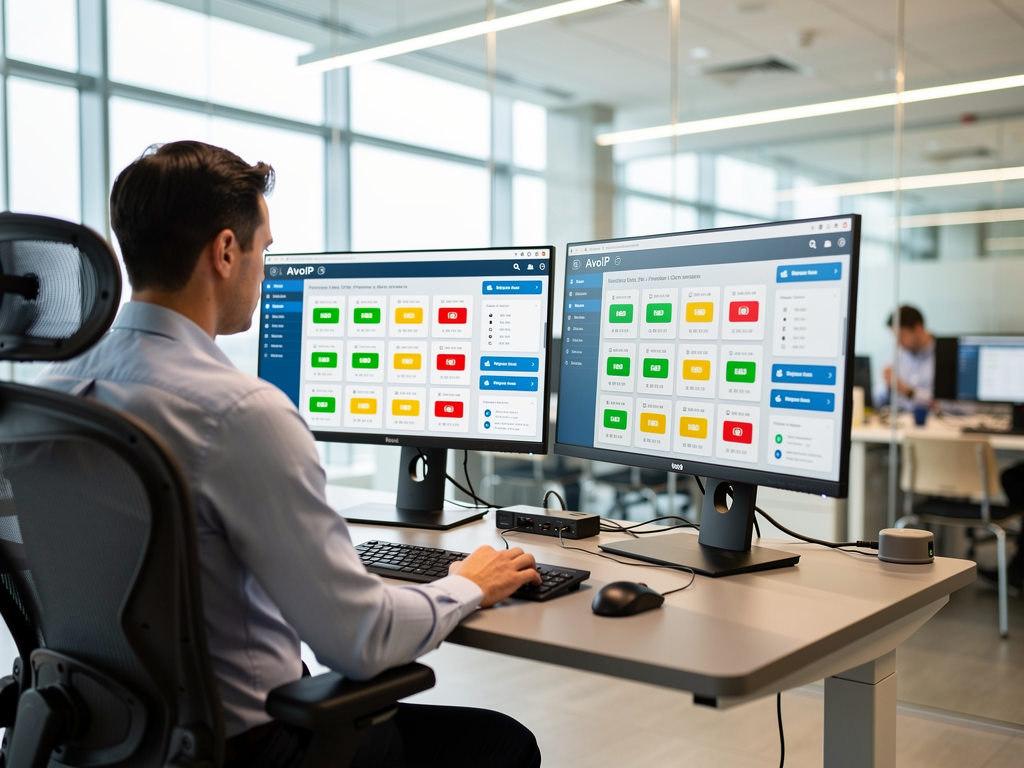
Integration with existing enterprise systems amplifies the value of centralized management. Look for AVoIP solutions that support standard protocols like SNMP for network monitoring integration, REST APIs for custom automation, and compatibility with popular control systems from Crestron, Extron, and AMX. This interoperability ensures that AV systems integrate smoothly with broader IT infrastructure and building management systems.
Consider implementing automated alerting for critical events like encoder failures, network connectivity issues, or quality degradation. Proactive monitoring allows IT teams to address problems before users report issues, improving overall system reliability and user satisfaction. Many management platforms support integration with enterprise ticketing systems, automatically creating service requests when problems occur.
Real-World Implementation: Corporate Campus Case Study
A multinational financial services organization recently deployed AVoIP across 47 locations spanning North America, Europe, and Asia Pacific. The deployment replaced aging matrix switcher infrastructure with a modern IP-based architecture, enabling new collaboration capabilities while reducing ongoing maintenance costs.

The organization selected ADTECHNO encoders and decoders for their combination of reliability and advanced feature sets. Each site received standardized equipment packages, simplifying spare parts management and enabling consistent user experiences regardless of location. The deployment utilized H.264 compression for inter-site transmission, with local distribution using higher-quality streams where bandwidth permitted.
Network architecture incorporated dedicated AV VLANs at each site, with inter-site connectivity provided through existing MPLS infrastructure. QoS policies ensured AV traffic received priority treatment, maintaining consistent quality even during peak business hours. The centralized management platform provided visibility into all 2,300 deployed endpoints, enabling the small AV operations team to effectively support the global deployment.
Post-deployment metrics demonstrated 99.7% system availability across all sites, with mean time to resolution for issues reduced by 60% compared to the previous infrastructure. The organization reported significant improvements in cross-site collaboration, with employees citing the seamless video experience as enabling more effective remote teamwork.
Security Considerations for Enterprise AVoIP Deployments
Security requirements for multi-site AVoIP deployments extend beyond traditional AV concerns, requiring alignment with enterprise cybersecurity policies. Video streams may contain sensitive information, making encryption essential for transmission across untrusted network segments.

Look for AVoIP solutions supporting AES-128 or AES-256 encryption for stream protection. Many enterprise-grade encoders offer hardware-accelerated encryption, minimizing latency impact while ensuring content protection. Authentication mechanisms should integrate with existing directory services, enabling single sign-on and centralized user management.
Network segmentation provides defense-in-depth protection, isolating AV systems from general network traffic. Implement firewall rules restricting communication between AV VLANs and other network segments, permitting only necessary management and control traffic. Regular security assessments should include AVoIP infrastructure, ensuring devices receive timely firmware updates addressing discovered vulnerabilities.
Future-Proofing Your Multi-Site AVoIP Investment
Technology evolution continues accelerating, making future-proofing considerations essential for multi-site deployments. Select solutions based on open standards rather than proprietary protocols, ensuring interoperability with future equipment and reducing vendor lock-in risks.
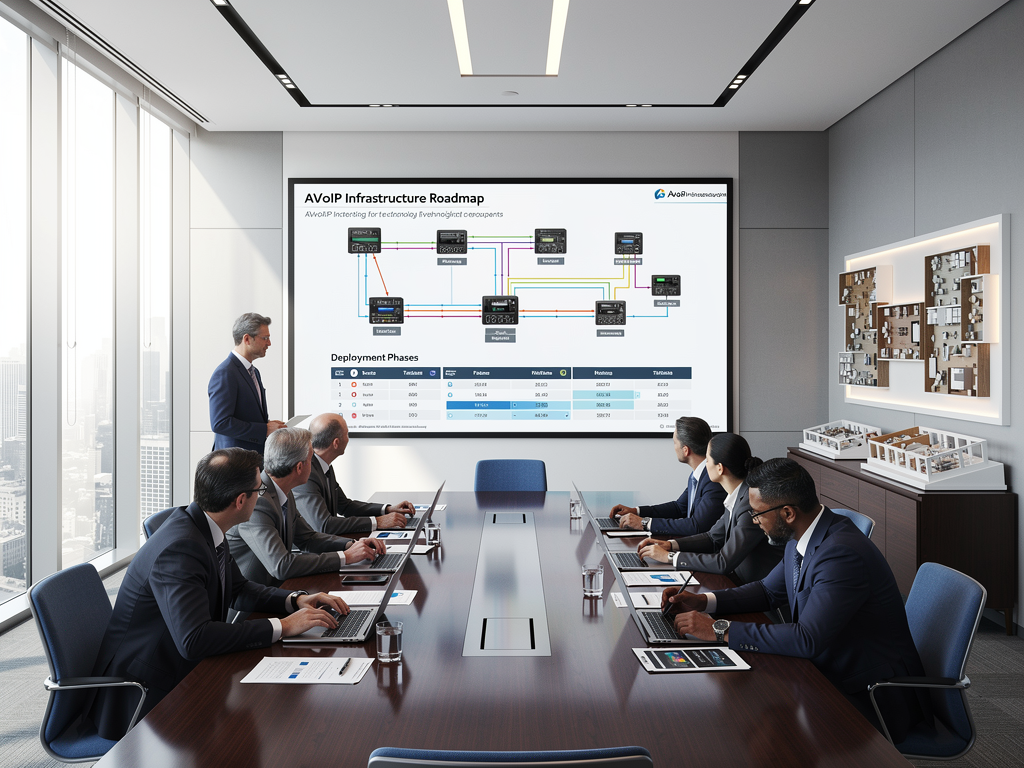
Standards like NDI, SDVoE, and IPMX provide varying levels of interoperability and performance characteristics. Understanding the tradeoffs between these standards helps organizations make informed decisions aligned with their specific requirements. The AVoIP Solutions Directory provides detailed comparisons of products supporting various standards, simplifying evaluation processes.

Plan network infrastructure with capacity for future requirements, including higher resolution formats like 8K and emerging immersive technologies. While current deployments may focus on 4K content, network designs should accommodate bandwidth growth without requiring complete infrastructure replacement. Investing in higher-capacity switches and structured cabling during initial deployment proves more cost-effective than retrofitting later.

Document all deployment decisions, configurations, and lessons learned. This institutional knowledge proves invaluable during future expansions, troubleshooting, and staff transitions. Maintain relationships with manufacturers and integrators who can provide ongoing support and guidance as technology evolves.

Multi-site AVoIP deployments represent significant investments requiring careful planning, execution, and ongoing management. By addressing network architecture, codec selection, centralized management, security, and future-proofing considerations, organizations can implement distributed AV systems that deliver reliable performance and enable enhanced collaboration across geographic boundaries. The strategies outlined in this guide provide a framework for success, though each deployment requires customization based on specific organizational requirements and constraints.
Comments(0)