Scaling Enterprise AVoIP Systems: Best Practices & Architecture
Deploying Audio Video over IP across multiple enterprise locations presents unique challenges. Learn best practices for network architecture, bandwidth, latency, and centralized control to ensure reliable, high-performance AV distribution.
AVoIP AV Directory
Scaling AVoIP Systems: Best Practices for Enterprise Deployments
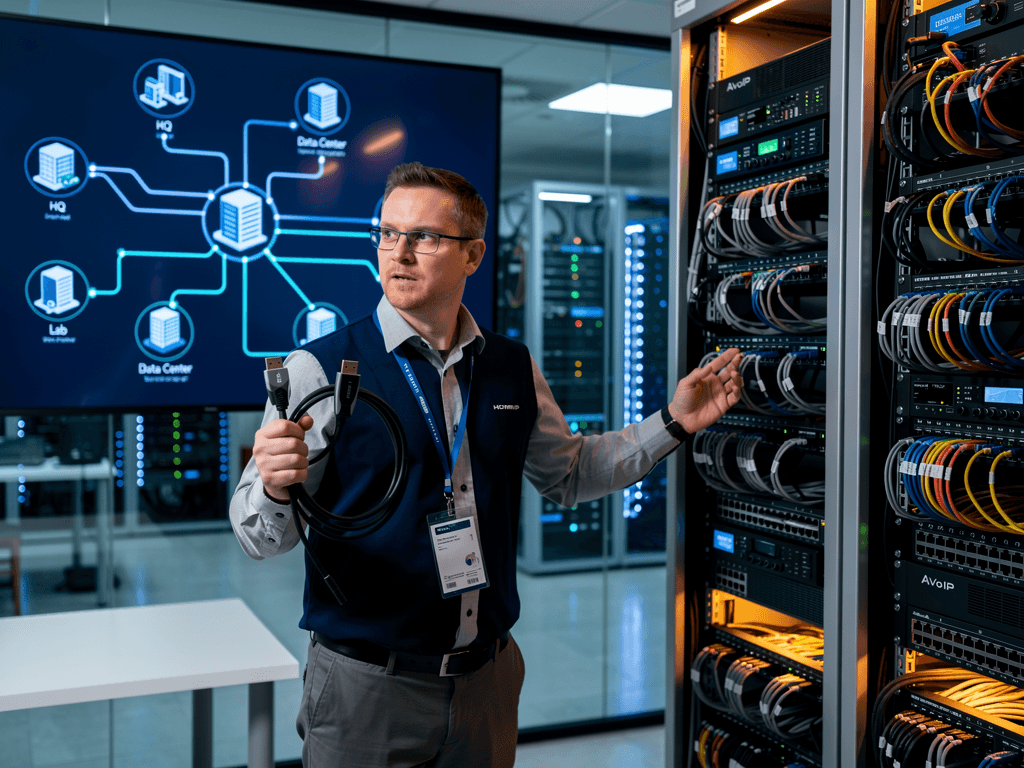
Enterprise organizations face unique challenges when deploying Audio Video over IP solutions across multiple buildings, campuses, or geographic locations. Unlike small installations where a handful of encoders and decoders communicate over a single switch, enterprise deployments demand careful planning around network architecture, bandwidth management, latency optimization, and centralized control. The transition from traditional matrix switching to IP-based distribution represents both an opportunity and a complexity multiplier that requires methodical execution.
This comprehensive guide explores the critical considerations, proven methodologies, and practical recommendations for scaling AVoIP systems in enterprise environments. Whether you are planning a corporate headquarters deployment, a university campus rollout, or a multi-site healthcare network, these best practices will help ensure reliable, high-performance AV distribution that meets organizational demands today and scales gracefully for tomorrow.
Understanding Enterprise AVoIP Architecture Requirements
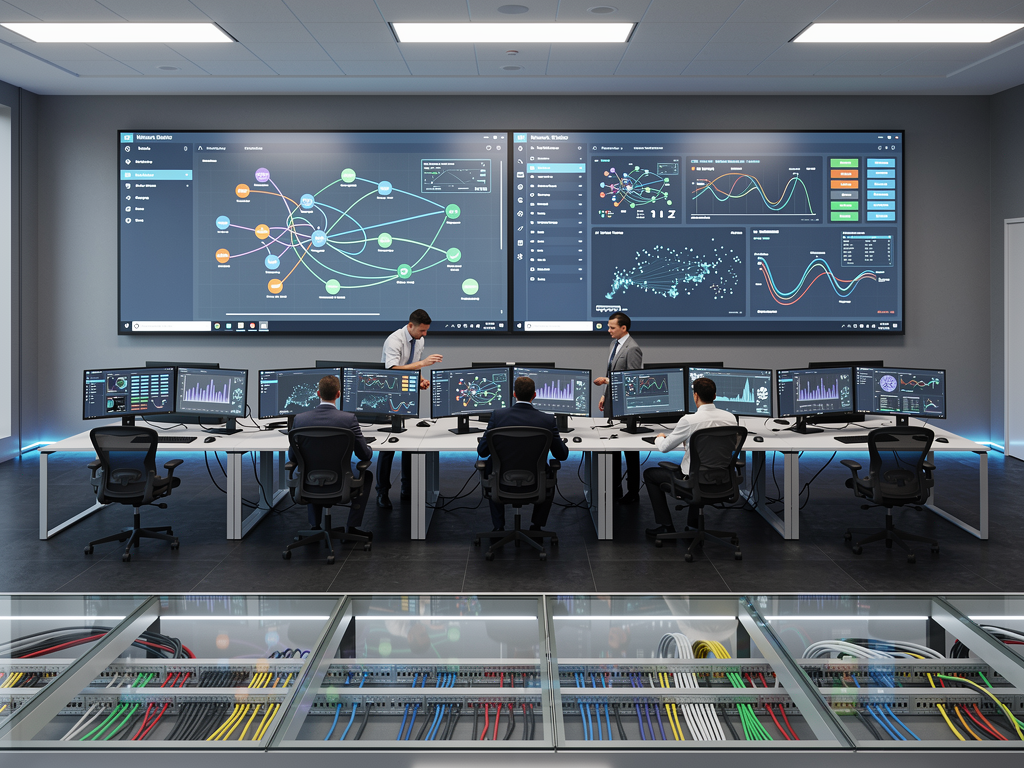
Enterprise AVoIP deployments differ fundamentally from smaller installations in their architectural complexity. A conference room with four displays and two sources operates very differently from a corporate campus with 500 endpoints distributed across 12 buildings. The architectural decisions made during the planning phase will determine whether the system scales smoothly or becomes a maintenance nightmare.
The foundation of any enterprise AVoIP system rests on three pillars: network infrastructure, endpoint selection, and control system integration. Network infrastructure must support multicast traffic efficiently, provide adequate bandwidth headroom, and maintain consistent latency across all paths. Endpoint selection involves choosing encoders and decoders that match performance requirements while remaining compatible with the chosen protocol ecosystem. Control system integration ensures that operators can manage hundreds or thousands of endpoints from centralized interfaces without overwhelming complexity.
Organizations should evaluate their requirements across multiple dimensions before selecting specific products. Consider the resolution and frame rate requirements for different zones, as executive boardrooms may demand 4K60 with HDR while digital signage displays might function perfectly with 1080p streams. Manufacturers like Visionary AV offer encoder and decoder solutions that support various quality tiers, allowing organizations to match performance with actual needs rather than over-provisioning everywhere.
Latency tolerance varies significantly by application. Video walls displaying marketing content can tolerate 100 milliseconds or more, while live presentation switching in auditoriums requires sub-frame latency to avoid visible delays during source transitions. Understanding these requirements zone by zone enables more efficient resource allocation and helps justify infrastructure investments to stakeholders.
Network Infrastructure Design for Scale
The network backbone supporting enterprise AVoIP must be designed with specific characteristics that differ from general IT traffic patterns. Video streams are bandwidth-intensive, latency-sensitive, and often utilize multicast delivery, which requires switches and routers configured appropriately. Many enterprise AVoIP failures trace back to network infrastructure that was adequate for data traffic but unsuitable for real-time media.
IGMP snooping configuration represents one of the most critical yet frequently misconfigured elements. Without proper IGMP snooping, multicast traffic floods all ports, consuming bandwidth and overwhelming endpoints that have no interest in particular streams. Enterprise switches must be configured with IGMP snooping enabled, querier functionality properly assigned, and appropriate timers set to prevent streams from being pruned during brief periods of inactivity.
Bandwidth calculations for enterprise deployments must account for peak simultaneous usage rather than average loads. A 1 Gbps access switch port might seem adequate for a single 4K60 stream at 400 Mbps, but when that endpoint also handles USB extension, audio return channels, and control traffic, headroom disappears quickly. Organizations deploying high-density AVoIP should consider 10 Gbps uplinks from access switches and potentially 10 Gbps to endpoints in demanding applications.
Quality of Service configurations ensure that AV traffic receives priority treatment when network congestion occurs. Implementing DSCP marking at encoder endpoints and honoring those markings throughout the network path prevents video artifacts and audio dropouts during periods of heavy data traffic. Most enterprise-grade AVoIP products from manufacturers like BZBGEAR and TiGHT AV support configurable QoS marking, allowing integration with existing network policies.
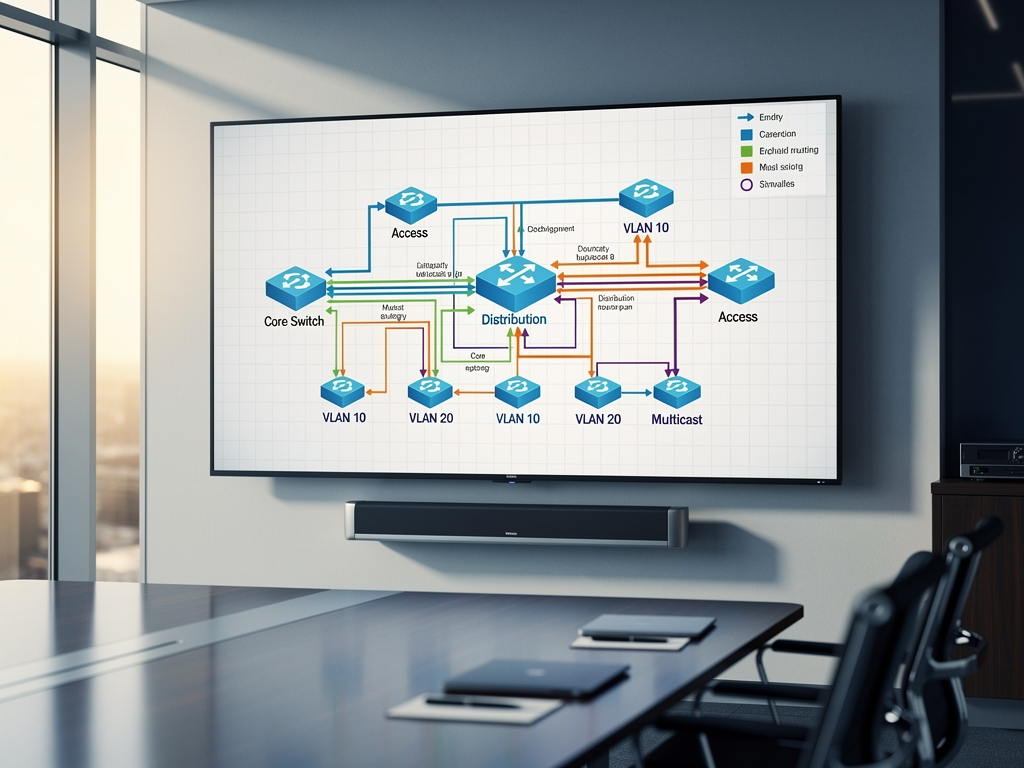
Network segmentation through VLANs provides both security and traffic management benefits. Isolating AVoIP traffic onto dedicated VLANs prevents interference from general network activity while simplifying troubleshooting when issues arise. However, VLAN design must consider the multicast routing requirements when AV traffic needs to cross VLAN boundaries, as this introduces additional complexity requiring PIM configuration on layer 3 devices.
Selecting Encoders and Decoders for Enterprise Scale
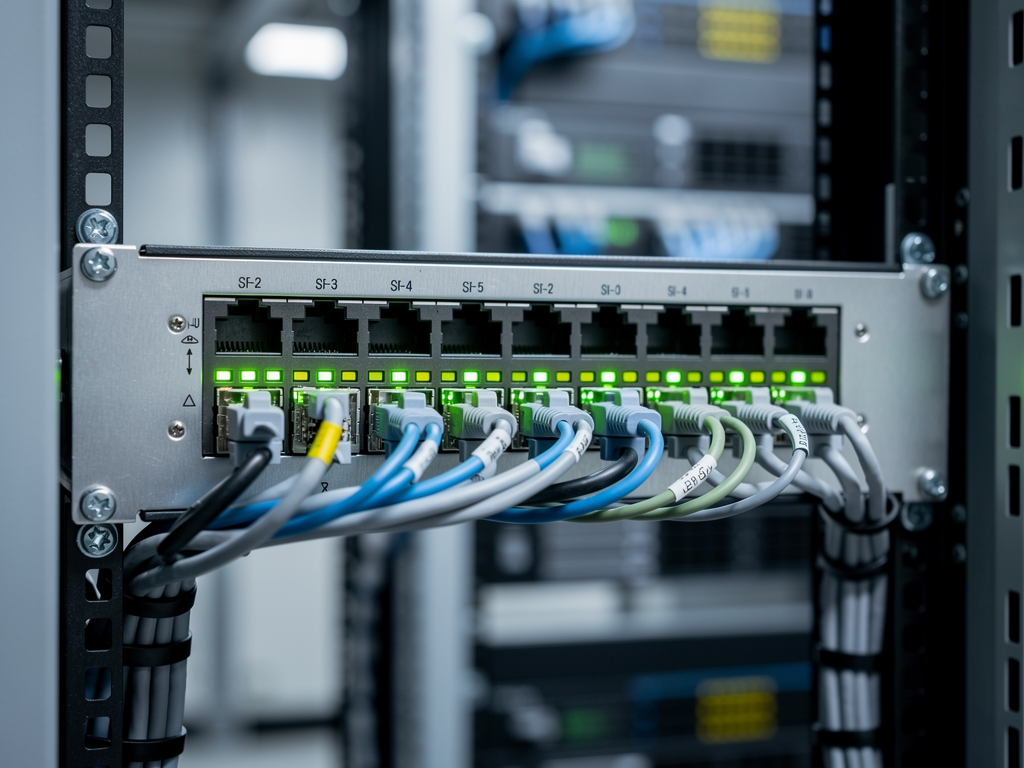
Endpoint selection for enterprise deployments requires balancing performance, interoperability, manageability, and total cost of ownership. The market offers numerous AVoIP protocols including NDI, SDVoE, Dante AV, and various proprietary implementations, each with distinct characteristics that favor different use cases.
Interoperability considerations become paramount at enterprise scale. Organizations should generally standardize on a single protocol family to ensure any source can reach any display without transcoding delays or quality degradation. While multi-protocol environments are technically possible, they introduce complexity that multiplies with scale. Selecting a protocol with broad manufacturer support, such as NDI or Dante AV, provides flexibility in endpoint sourcing while maintaining system coherence.
Hardware reliability and mean time between failures directly impact operational costs in large deployments. When managing 500 endpoints, even a 1% annual failure rate means five device replacements per year, each requiring technician time, spare inventory, and potential service disruption. Manufacturers with established track records in professional AV, including ADTECHNO and Craltech, typically offer more robust hardware designs and longer warranty periods that reduce total cost of ownership.
Remote management capabilities become essential rather than optional at enterprise scale. Endpoints should support firmware updates, configuration changes, and status monitoring through centralized management platforms. Products that require physical access for basic configuration changes create unsustainable operational burdens when deployed across multiple buildings or campuses. Look for REST API support, SNMP integration, and compatibility with enterprise monitoring platforms.
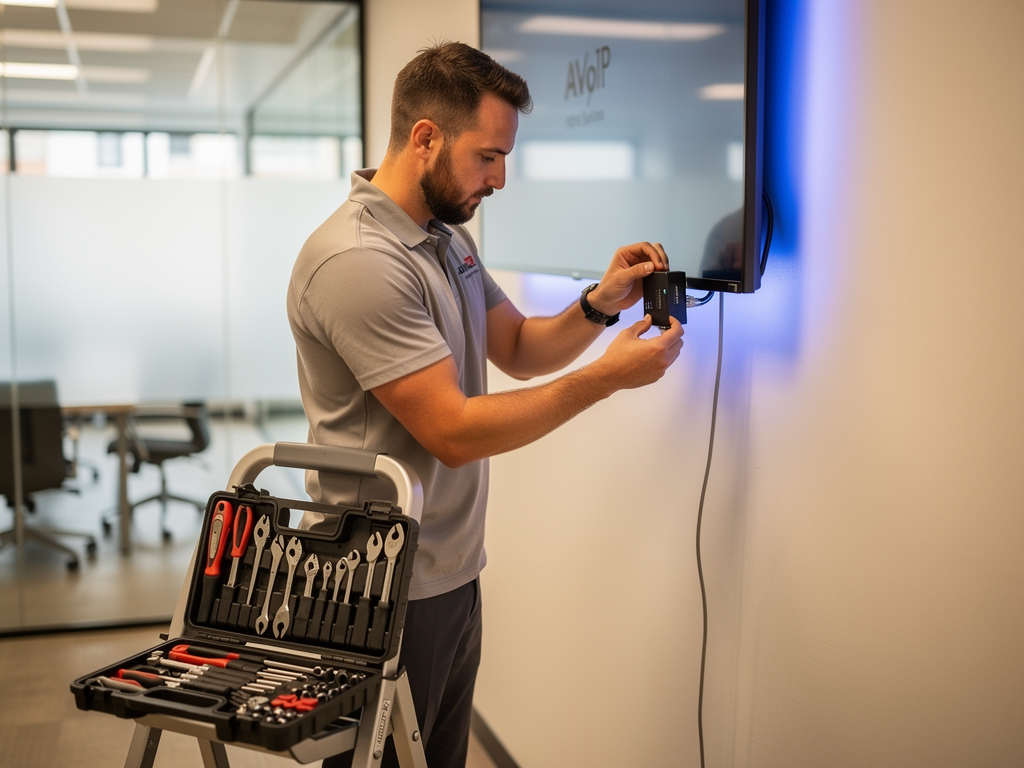
Power over Ethernet support simplifies installation and reduces infrastructure costs significantly. PoE-powered encoders and decoders require only network cabling, eliminating the need for local power outlets at each endpoint location. This capability proves especially valuable in retrofit scenarios where adding electrical circuits would require expensive construction work. Products from Netvio and similar manufacturers offer PoE-powered options that maintain professional performance while simplifying deployment logistics.
Centralized Control and Management Strategies
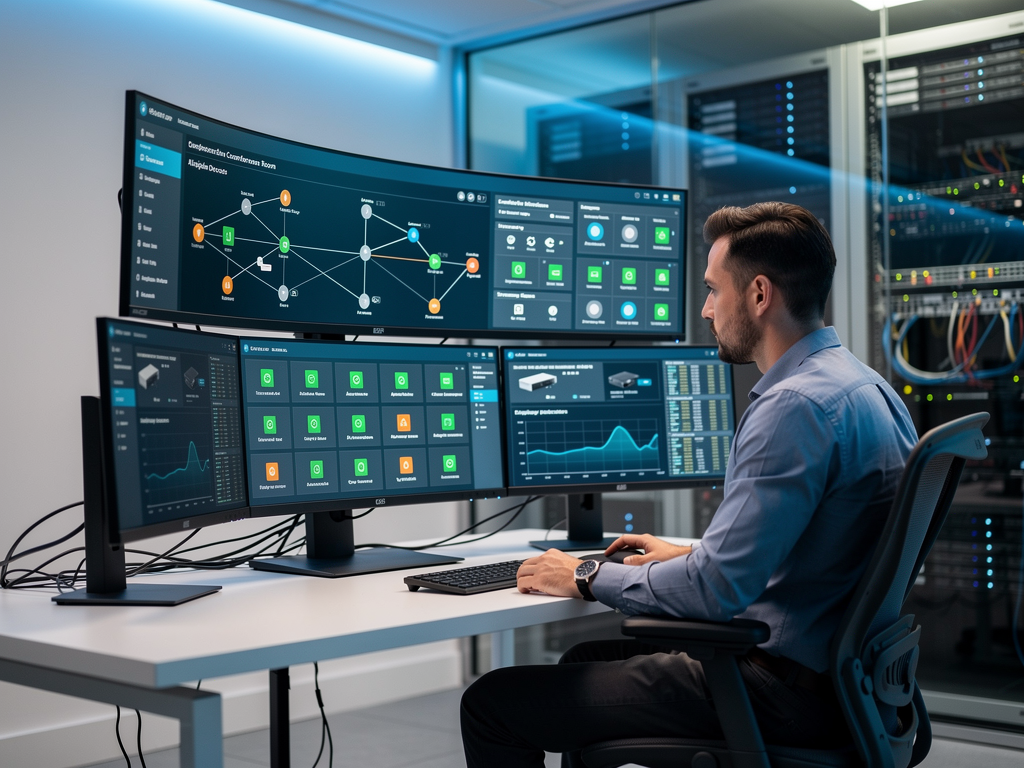
Managing hundreds or thousands of AVoIP endpoints requires sophisticated control systems that abstract complexity while providing granular access when needed. The control architecture must serve multiple user types: end users who simply want to share content, room operators who manage daily configurations, and system administrators who handle maintenance and troubleshooting.
Hierarchical control structures work well for enterprise deployments. End users interact with simplified room interfaces, perhaps touchpanels or mobile apps, that present only relevant options for their space. Room operators access building-level dashboards showing status across multiple rooms with the ability to override configurations or troubleshoot basic issues. System administrators utilize enterprise management platforms providing complete visibility and control across all endpoints.
API-driven integration enables AVoIP systems to participate in broader enterprise automation. Modern control platforms should expose REST APIs that allow integration with room booking systems, digital signage platforms, building management systems, and IT service management tools. When a meeting room booking ends, automation can return the room to default configuration, power down displays, and log the session for usage analytics.
Monitoring and alerting capabilities prevent small issues from becoming major outages. Enterprise management platforms should track endpoint health metrics including network connectivity, stream quality, temperature, and error rates. Proactive alerts when metrics exceed thresholds enable maintenance before users experience problems. Integration with enterprise monitoring tools like Nagios, Zabbix, or ServiceNow provides unified visibility for IT operations teams.
Configuration management through templates and groups dramatically reduces administrative overhead. Rather than configuring each endpoint individually, administrators define templates for common scenarios, such as conference room encoder, lobby display decoder, or executive office setup, and apply them to groups of devices. Changes to templates automatically propagate to all associated endpoints, ensuring consistency and reducing configuration drift.
Redundancy and Failover Planning
Enterprise environments demand high availability that consumer-grade or small-scale AVoIP approaches cannot provide. Mission-critical applications including emergency operations centers, broadcast facilities, and executive communication systems require redundancy at multiple levels to maintain operation during component failures.
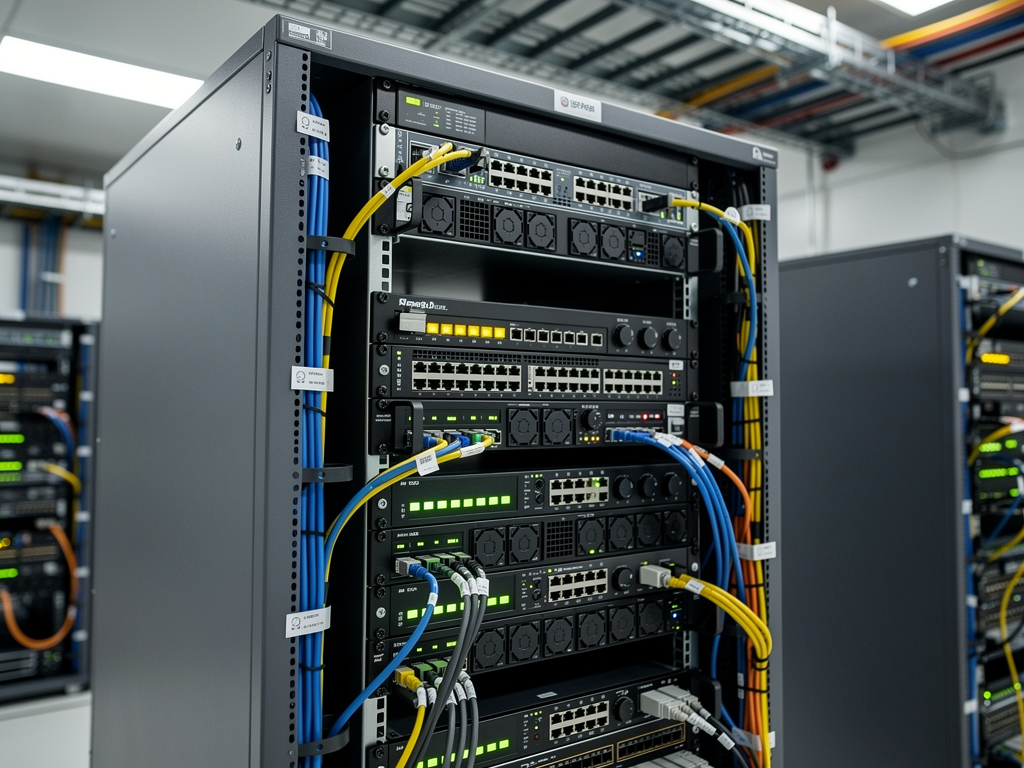
Network redundancy through redundant paths and rapid failover protocols protects against switch or link failures. Spanning Tree Protocol provides basic redundancy but with failover times measured in seconds, which causes visible service interruption. Modern alternatives including Rapid Spanning Tree and proprietary ring protocols reduce failover to sub-second intervals. For the most demanding applications, consider network architectures with active-active paths using link aggregation or software-defined networking approaches.
Encoder redundancy ensures critical sources remain available even during hardware failures. For executive boardrooms or broadcast applications, deploying redundant encoders with automatic failover provides continuous operation. Some AVoIP protocols support seamless switching between redundant streams, while others require control system logic to detect failures and switch to backup sources.
Control system redundancy prevents single points of failure in the management infrastructure. Enterprise deployments should include redundant control processors, database replication for configuration data, and documented manual override procedures for scenarios where automated control becomes unavailable. Cloud-based management platforms introduce their own redundancy considerations around internet connectivity and service provider reliability.
Documentation and disaster recovery planning complete the redundancy picture. Maintaining current network diagrams, configuration backups, and recovery procedures enables rapid restoration after major failures. Regular testing of backup systems and recovery procedures identifies gaps before actual emergencies expose them.
Phased Deployment and Migration Strategies
Large-scale AVoIP deployments rarely succeed as single massive projects. Phased approaches allow organizations to learn from early installations, refine processes, and demonstrate value before committing full resources. Migration from legacy matrix-based systems requires particular care to maintain operations during the transition period.
Pilot deployments should include representative samples of all planned use cases. A pilot limited to conference rooms provides no insight into the challenges of lobby video walls or auditorium systems. Select pilot locations that exercise different aspects of the planned system while remaining manageable in scope. Document lessons learned rigorously and incorporate them into subsequent phases.
Parallel operation periods allow comparison between legacy and new systems while providing fallback capability. During migration, maintain the ability to revert to previous systems if critical issues emerge. This safety net enables more aggressive timelines while managing risk appropriately. Plan for eventual decommissioning of legacy systems to avoid indefinite maintenance of parallel infrastructure.
Training and change management deserve equal attention alongside technical deployment. End users accustomed to traditional AV systems may struggle with IP-based approaches that behave differently. Develop training materials, conduct hands-on sessions, and provide readily accessible support during initial rollout periods. User adoption failures can undermine technically successful deployments.
Vendor partnerships become increasingly valuable at enterprise scale. Manufacturers including TiGHT AV and other professional AVoIP brands often provide deployment support, training programs, and escalation paths for complex issues. Establishing these relationships before deployment begins ensures access to expertise when challenges arise.

Performance Optimization and Ongoing Maintenance
Enterprise AVoIP systems require ongoing attention to maintain optimal performance as usage patterns evolve and network conditions change. Establishing baseline performance metrics during initial deployment enables identification of degradation over time and guides optimization efforts.
Regular firmware updates address security vulnerabilities, fix bugs, and occasionally introduce performance improvements. Establish maintenance windows for firmware deployment and test updates in non-production environments before broad rollout. Maintain rollback capability in case updates introduce unexpected issues. Coordinate with IT security teams to ensure AVoIP endpoints remain compliant with organizational security policies.
Capacity monitoring identifies when infrastructure approaches limits before users experience problems. Track bandwidth utilization on network links, CPU and memory usage on control systems, and endpoint performance metrics. Establish thresholds that trigger capacity expansion before saturation causes service degradation.
Periodic audits verify that deployed configurations match documentation and organizational standards. Configuration drift occurs naturally as technicians make adjustments during troubleshooting or users request modifications. Automated compliance checking tools can identify deviations and either alert administrators or automatically remediate depending on organizational preferences.

Cost Considerations and ROI Analysis
Enterprise AVoIP deployments represent significant investments that require clear justification. Understanding total cost of ownership beyond initial hardware purchases enables accurate budgeting and realistic ROI projections. The flexibility and scalability of IP-based systems often provide compelling long-term value even when initial costs exceed traditional alternatives.
Infrastructure costs include network switches, cabling, and potentially upgrades to existing network equipment. While AVoIP eliminates expensive proprietary matrix switchers, it shifts costs to network infrastructure that may require enhancement. Organizations with modern network infrastructure often find AVoIP reduces total infrastructure costs, while those requiring significant network upgrades may see higher initial investments.
Operational costs decrease significantly with properly designed AVoIP systems. Centralized management reduces technician travel between locations. Remote troubleshooting capabilities resolve many issues without on-site visits. Standardized equipment simplifies spare parts inventory and technician training. These ongoing savings compound over system lifetime, often justifying higher initial investments.
Scalability provides perhaps the most significant long-term value. Adding endpoints to AVoIP systems typically requires only network connectivity and device configuration, while traditional matrix systems require expensive expansion frames or complete replacement when capacity limits are reached. Organizations anticipating growth should factor scalability costs into comparative analyses.

Future-Proofing Enterprise AVoIP Investments
Technology evolution continues rapidly in the AVoIP space, with new protocols, higher resolutions, and enhanced features emerging regularly. Enterprise deployments must balance current requirements against future adaptability to protect investments over typical seven to ten year system lifecycles.
Standards-based protocols provide better long-term protection than proprietary alternatives. Open standards including SMPTE ST 2110, NDI, and Dante AV enjoy broad industry support and continued development. While proprietary solutions may offer specific advantages, they carry higher risk of obsolescence or vendor lock-in that limits future options.
Network infrastructure investments typically outlast endpoint hardware. Building robust network foundations with capacity headroom enables future endpoint upgrades without infrastructure replacement. Investing in 10 Gbps or higher network capacity today accommodates 8K and beyond resolutions that will become mainstream during current system lifecycles.
Modular architectures enable incremental upgrades rather than wholesale replacement. Systems designed with clear separation between transport, control, and endpoint layers allow upgrading individual components as technology advances. This approach spreads investment over time while maintaining continuous operation.

Conclusion
Scaling AVoIP systems for enterprise deployments requires comprehensive planning across network infrastructure, endpoint selection, control architecture, and operational procedures. Success depends on understanding the unique characteristics of IP-based AV distribution and designing systems that leverage its flexibility while mitigating its complexities.
Organizations that invest in proper network foundations, select appropriate endpoints from reputable manufacturers in the AVoIP industry, implement robust control systems, and plan for ongoing maintenance will realize the significant benefits that modern AVoIP technology offers. The scalability, flexibility, and long-term cost advantages of IP-based AV distribution make it the clear choice for enterprise environments, provided deployments follow established best practices and avoid common pitfalls.
By approaching enterprise AVoIP as a strategic infrastructure investment rather than simply a technology upgrade, organizations position themselves for success both immediately and as their needs evolve in the years ahead.
Comments(0)