Integrating AVoIP with Traditional AV Systems: A Practical Guide
Discover how to successfully integrate AV over IP (AVoIP) solutions with existing traditional AV infrastructure. This guide covers practical considerations, methodologies, and best practices for creating hybrid AV environments, protecting investments, and enhancing capabilities in corporate, educational, and commercial settings.
AVoIP AV Directory
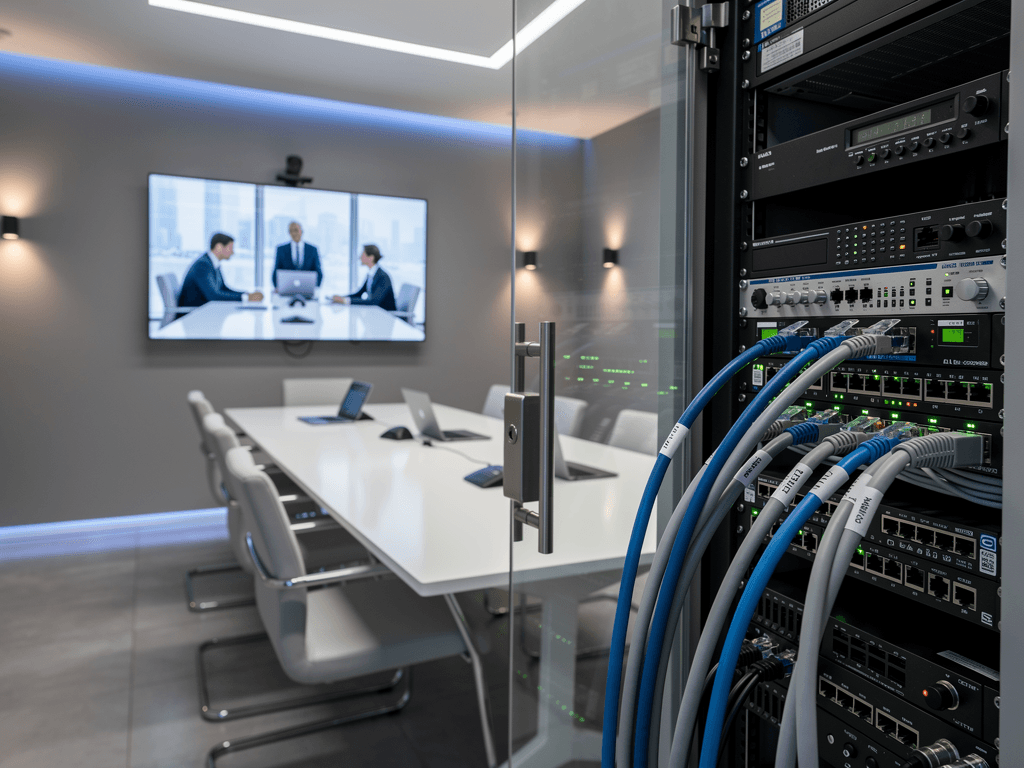
Integrating AVoIP with Traditional AV Infrastructure: A Practical Guide
The transition from traditional audiovisual systems to AV over IP technology represents one of the most significant shifts in professional AV deployment over the past decade. However, most organizations cannot simply abandon their existing matrix switchers, point-to-point extenders, and legacy equipment overnight. The reality of modern AV integration often involves creating hybrid environments where networked AV solutions coexist with established infrastructure, delivering enhanced capabilities while protecting previous investments.
Understanding how to bridge these two worlds effectively requires careful planning, technical knowledge, and strategic decision-making. This guide explores the practical considerations, methodologies, and best practices for integrating AVoIP solutions with traditional AV infrastructure in corporate, educational, and commercial environments.
Understanding the Fundamental Differences Between Traditional and Networked AV
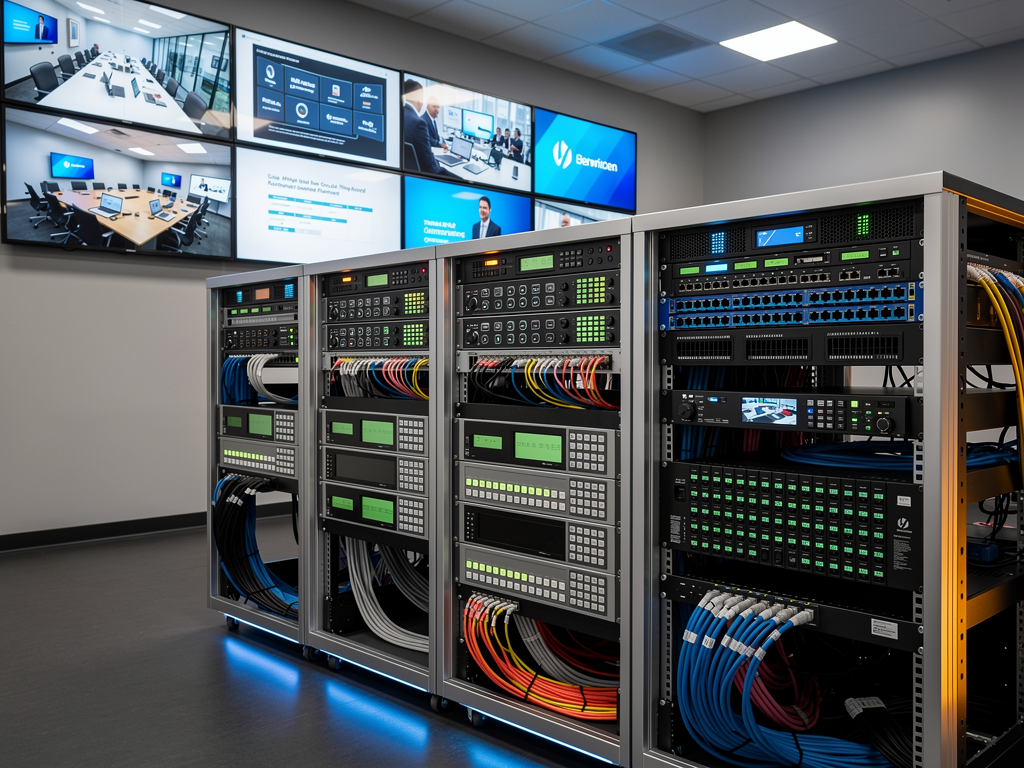
Traditional AV infrastructure operates on dedicated signal paths using proprietary or standardized baseband connections. HDMI, SDI, HDBaseT, and analog connections create direct links between sources and displays, with matrix switchers serving as central routing hubs. This architecture provides predictable performance and straightforward troubleshooting but lacks flexibility when scaling or reconfiguring systems.
AVoIP technology fundamentally reimagines signal distribution by packetizing audio and video content for transmission over standard IP networks. Protocols such as NDI, SDVoE, Dante AV, and IPMX each approach this challenge differently, offering varying balances of quality, latency, and bandwidth requirements. The key advantage lies in leveraging existing network infrastructure while enabling virtually unlimited scaling and routing flexibility.
The integration challenge emerges when organizations need both systems to work together seamlessly. A conference room might require legacy VGA inputs from older equipment while simultaneously supporting modern HDMI sources and network-based collaboration tools. Understanding where each technology excels helps determine the optimal integration strategy for specific use cases.
Manufacturers like Visionary AV and BZBGEAR have recognized this market need, developing products specifically designed to bridge traditional and networked environments. Their encoder and decoder solutions often include multiple input and output formats, simplifying the transition process considerably.
Assessing Your Existing Infrastructure for AVoIP Integration
Before implementing any hybrid solution, conducting a thorough infrastructure assessment proves essential. This evaluation should examine current signal routing requirements, network capacity, cable pathways, and future expansion needs. Many organizations discover that their existing category cabling can support AVoIP deployment with minimal modifications.

Network readiness represents the most critical factor in successful AVoIP integration. Traditional AV systems operate independently of IT infrastructure, but networked AV requires switches capable of handling multicast traffic, implementing IGMP snooping, and providing adequate bandwidth. Gigabit switches suffice for many compressed AVoIP solutions, while uncompressed protocols like SDVoE demand 10-gigabit connectivity.
Documenting existing signal flows helps identify integration points where AVoIP can enhance capabilities. Perhaps a traditional matrix switcher handles local room sources effectively, but content sharing from remote locations requires network-based distribution. In such scenarios, adding encoders at remote locations and decoders at the matrix inputs creates a hybrid system that extends reach without replacing functional equipment.
Power over Ethernet capabilities deserve particular attention during assessment. Many AVoIP endpoints from manufacturers like TiGHT AV and ADTECHNO support PoE powering, eliminating the need for local power outlets and simplifying installation. Verifying that existing switches provide adequate PoE budget prevents unexpected infrastructure upgrades.
Designing Hybrid AV Architectures for Optimal Performance
Successful hybrid architectures require thoughtful design that leverages the strengths of both traditional and networked approaches. The goal involves creating seamless user experiences while maintaining system reliability and manageability. Several proven architectural patterns have emerged from real-world deployments.
The gateway approach positions AVoIP encoders and decoders as bridges between networked and traditional domains. A central equipment room might contain a traditional matrix switcher handling local sources, with AVoIP decoders providing additional inputs from network-connected locations. This pattern preserves existing investments while extending system capabilities.
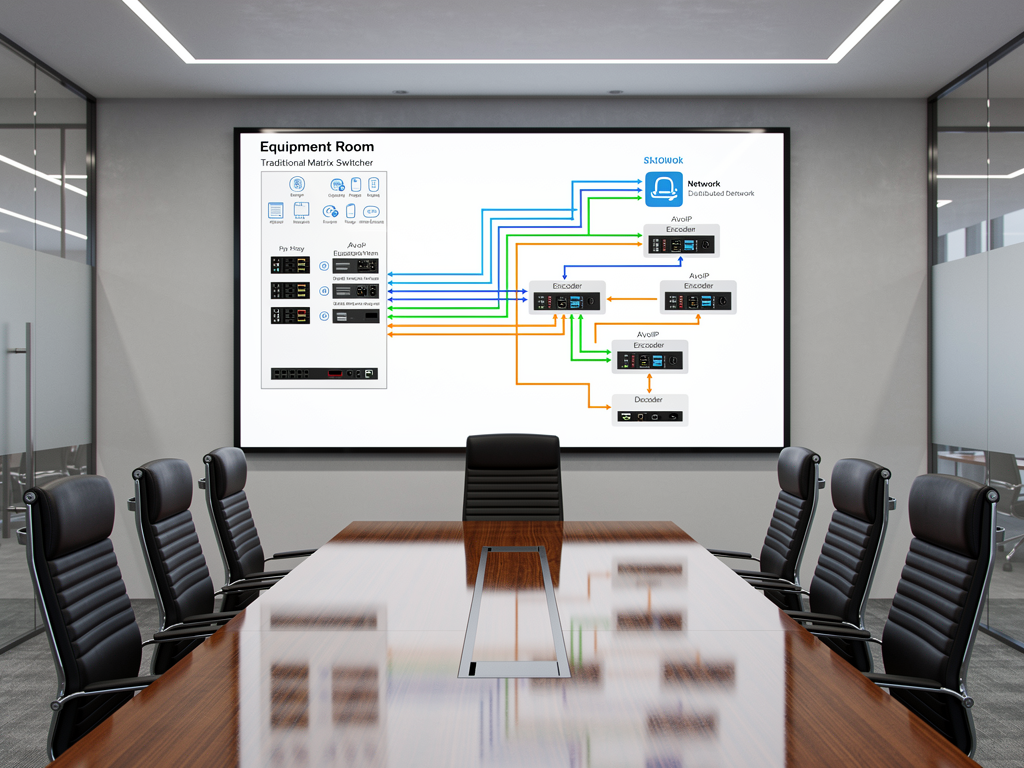
Distributed encoding represents another effective strategy, particularly for campus or multi-building environments. Traditional AV systems operate independently within each location, while AVoIP encoders capture and distribute content across the network. Products from Craltech and Netvio excel in these applications, offering reliable encoding with flexible output options.
The phased migration approach acknowledges budget constraints and operational requirements. Organizations implement AVoIP in new installations or renovations while maintaining traditional systems elsewhere. Over time, as legacy equipment reaches end-of-life, networked solutions replace them systematically. This strategy minimizes disruption while building institutional knowledge gradually.
Multiviewer integration deserves special consideration in hybrid environments. Traditional multiviewers accept baseband inputs, requiring AVoIP decoders to convert network streams. Alternatively, software-based multiviewers can display AVoIP sources directly, potentially reducing hardware requirements while increasing flexibility.
Network Configuration Best Practices for Hybrid Environments
Proper network configuration determines whether hybrid AV systems perform reliably or frustrate users with dropouts and latency issues. Several key considerations apply regardless of which AVoIP protocol you implement.
VLAN segmentation isolates AV traffic from general network activity, preventing bandwidth contention and simplifying quality of service implementation. Creating dedicated AV VLANs ensures that video streams receive priority treatment without impacting business-critical applications. Most enterprise-grade switches support the necessary VLAN configurations.

IGMP snooping configuration prevents multicast traffic from flooding all switch ports, which would quickly overwhelm network capacity in larger deployments. Enabling IGMP snooping with appropriate querier settings ensures that multicast streams reach only intended recipients. Testing these configurations before deployment prevents troublesome surprises during commissioning.
Quality of Service policies prioritize AV traffic during periods of network congestion. Configuring DSCP markings and queue priorities ensures that video streams maintain consistent quality even when other network traffic increases. Working closely with IT departments during this configuration phase builds collaborative relationships and ensures policy alignment.
Spanning Tree Protocol settings require attention in networks with redundant paths. Rapid Spanning Tree Protocol provides faster convergence times, minimizing video disruption during network topology changes. Configuring edge ports appropriately prevents unnecessary topology recalculations when endpoints connect or disconnect.
Control System Integration Strategies
Unified control represents one of the greatest challenges in hybrid AV environments. Users expect single-touch operation regardless of whether sources and displays connect via traditional or networked infrastructure. Achieving this seamless experience requires careful control system programming and appropriate API utilization.
Modern AVoIP solutions typically offer multiple control interfaces, including RS-232, IP-based APIs, and integration with popular control platforms. Products from BZBGEAR and Visionary AV provide comprehensive control options that simplify integration with existing Crestron, Extron, or AMX control systems.
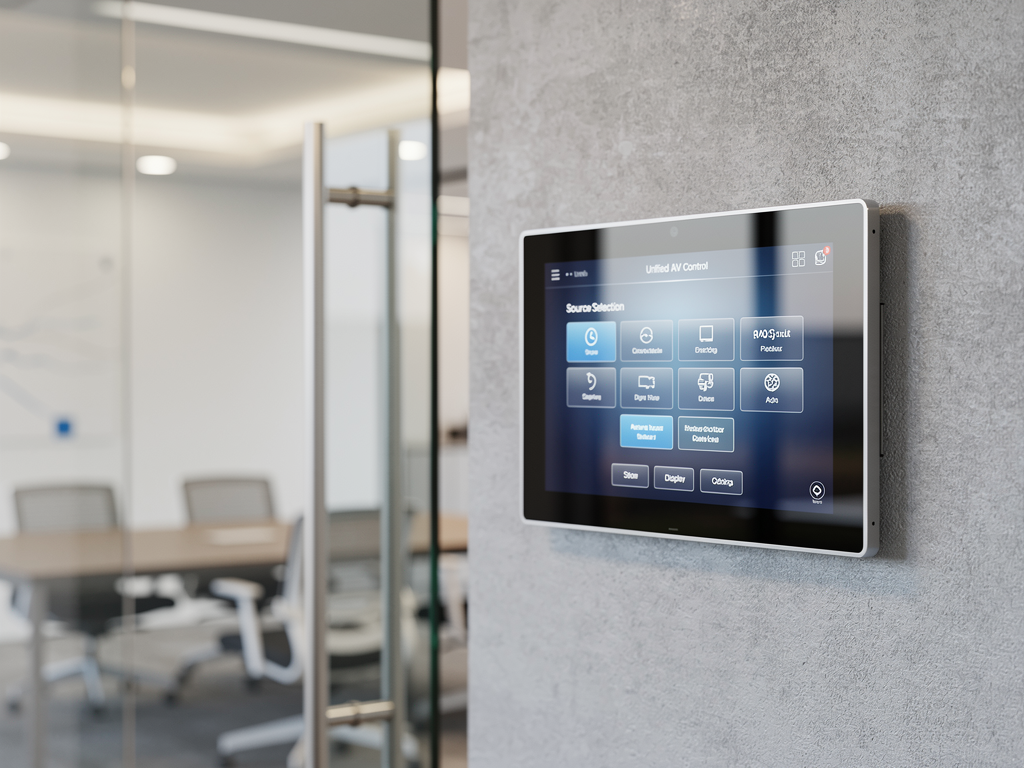
Abstracting the underlying infrastructure from user interfaces proves essential. Control system programming should present sources and destinations without revealing whether connections occur through traditional matrix switching or AVoIP routing. This abstraction simplifies user training while providing flexibility for future infrastructure changes.
Feedback integration ensures that control systems accurately reflect current system state. AVoIP devices should report connection status, signal presence, and any error conditions to the control system. This information enables intelligent automation and helps troubleshoot issues when they arise.
Scheduling and automation capabilities expand significantly in hybrid environments. Network-connected devices can receive commands and report status remotely, enabling centralized management across multiple locations. Building management system integration becomes practical when AV equipment connects to the network infrastructure.
Cost Considerations and Return on Investment Analysis
Financial justification for hybrid AV integration requires examining both immediate costs and long-term value. While AVoIP equipment adds expense, the total cost of ownership often favors networked solutions, particularly in larger or more complex installations.
Infrastructure reuse represents significant savings in hybrid deployments. Existing category cabling, network switches, and rack infrastructure can often support AVoIP equipment without modification. Compare this to traditional AV expansion, which typically requires new dedicated cabling for each signal path.

Scalability advantages compound over time. Adding sources or displays to traditional matrix systems often requires expensive frame upgrades or complete replacements. AVoIP systems scale by adding endpoints, with costs proportional to actual expansion rather than anticipated future needs. This flexibility proves particularly valuable in growing organizations.
Maintenance and support costs deserve consideration in ROI calculations. Network-based monitoring and management reduce truck rolls for troubleshooting. Remote firmware updates ensure systems remain current without on-site visits. These operational efficiencies accumulate significant savings over system lifetimes.
Products from manufacturers like TiGHT AV and ADTECHNO offer competitive pricing that makes hybrid integration financially accessible. Their solutions balance performance and cost-effectiveness, enabling organizations to implement networked AV capabilities without excessive capital expenditure.
Real-World Implementation Success Stories
Examining successful hybrid deployments provides valuable insights for planning your own integration projects. These examples demonstrate how organizations have effectively combined traditional and networked AV technologies.

A regional healthcare network faced the challenge of distributing surgical video across multiple facilities while maintaining existing operating room AV systems. By adding AVoIP encoders to capture surgical camera outputs, they enabled real-time streaming to training facilities without modifying proven OR equipment. The hybrid approach satisfied both clinical requirements and educational objectives.
Corporate headquarters renovations often present hybrid integration opportunities. One financial services firm maintained traditional AV in executive boardrooms while implementing AVoIP throughout newly constructed collaboration spaces. The unified control system presents both environments identically to users, while IT staff appreciate the network-based management capabilities.
Houses of worship frequently operate with limited budgets and volunteer technical staff. Hybrid approaches allow gradual modernization, adding AVoIP streaming capabilities while preserving functional traditional equipment. This phased strategy spreads costs across multiple budget cycles while building technical competency incrementally.
Future-Proofing Your Hybrid AV Investment
Technology evolution continues accelerating, making future-proofing considerations essential in any AV infrastructure decision. Hybrid architectures that accommodate change protect investments while enabling adoption of emerging capabilities.

Protocol flexibility matters significantly for long-term viability. While current deployments might utilize specific AVoIP protocols, the industry continues evolving. Selecting equipment that supports multiple protocols or offers firmware upgrade paths provides insurance against technological obsolescence.
Network infrastructure investments typically outlast AV equipment lifecycles. Deploying robust switching infrastructure with headroom for future bandwidth requirements ensures that network foundations support next-generation AVoIP solutions. Consider 10-gigabit backbone capacity even if current deployments require only gigabit connectivity.

Documentation and knowledge management ensure that institutional understanding persists through staff transitions. Maintaining accurate system diagrams, configuration records, and operational procedures enables effective ongoing management. This documentation proves invaluable during troubleshooting and future expansion planning.
Vendor relationships and support agreements contribute to long-term success. Working with manufacturers committed to product development and customer support ensures access to updates, technical assistance, and migration guidance. The AVoIP Solutions Directory provides resources for identifying manufacturers and distributors aligned with your organizational needs.
Integrating AVoIP with traditional AV infrastructure requires balancing technical requirements, budget constraints, and operational objectives. By understanding both technologies, assessing existing infrastructure thoroughly, and implementing proven design patterns, organizations can create hybrid environments that deliver immediate value while positioning for future advancement. The journey from traditional to networked AV need not occur overnight, and thoughtful hybrid approaches often prove more practical and cost-effective than complete system replacements.
Comments(0)