Integrating AVoIP with Existing AV Infrastructure: A Practical Guide
Transitioning to AV over IP doesn't mean starting from scratch. This guide explores strategies, considerations, and best practices for integrating modern AVoIP solutions into your existing infrastructure while protecting current investments.
AVoIP AV Directory

Integrating AVoIP with Existing AV Infrastructure: A Practical Guide
The transition from traditional matrix switching to AV over IP represents one of the most significant shifts in professional audiovisual system design over the past decade. For many organizations, however, the challenge is not building new facilities from scratch but rather integrating modern AVoIP solutions into existing infrastructure without disrupting daily operations. This practical guide explores the strategies, considerations, and best practices that will help you navigate this integration successfully while maximizing your return on existing investments.
Understanding Your Current Infrastructure Landscape
Before embarking on any AVoIP integration project, conducting a thorough assessment of your existing AV infrastructure is essential. This evaluation should encompass not only the audiovisual components themselves but also the underlying network architecture, cabling infrastructure, and control systems currently in place. Many facilities operate with a combination of HDMI matrix switches, HDBaseT extenders, and legacy analog systems that have served their purposes well but now require expansion or modernization.

Thorough infrastructure assessment forms the foundation of successful AVoIP integration
The network assessment phase deserves particular attention. Traditional AV systems often operated independently from IT networks, but AVoIP solutions require robust network connectivity with adequate bandwidth, proper VLAN segmentation, and quality of service configurations. Understanding your current network topology, switch capabilities, and available bandwidth will determine whether you can leverage existing infrastructure or need to implement dedicated AV networks. Many organizations discover that their existing enterprise switches can support AVoIP traffic with proper configuration, while others may need to deploy purpose-built AV network switches to ensure reliable performance.
Document every existing endpoint, including displays, sources, control interfaces, and audio systems. This inventory becomes your roadmap for planning the integration, identifying which components can remain in service, which require interface adapters, and which should be replaced entirely. Pay special attention to cable pathways and conduit capacity, as these physical constraints often influence the integration approach more than any technical specification.
Selecting the Right AVoIP Protocol for Integration
The AVoIP market offers several competing protocols, each with distinct characteristics that affect integration complexity. Understanding these differences helps you select solutions that complement your existing infrastructure rather than fighting against it. Protocols like NDI, SDVoE, Dante AV, and various JPEG2000 implementations each bring unique advantages depending on your specific requirements.
For facilities with significant investments in 1 Gigabit networking infrastructure, solutions utilizing efficient compression algorithms provide a practical integration path. Manufacturers such as TiGHT AV and BZBGEAR offer encoders and decoders that deliver excellent visual quality while operating within standard network bandwidth constraints. These solutions often prove ideal for corporate environments where existing network infrastructure must support both data traffic and AV streams simultaneously.
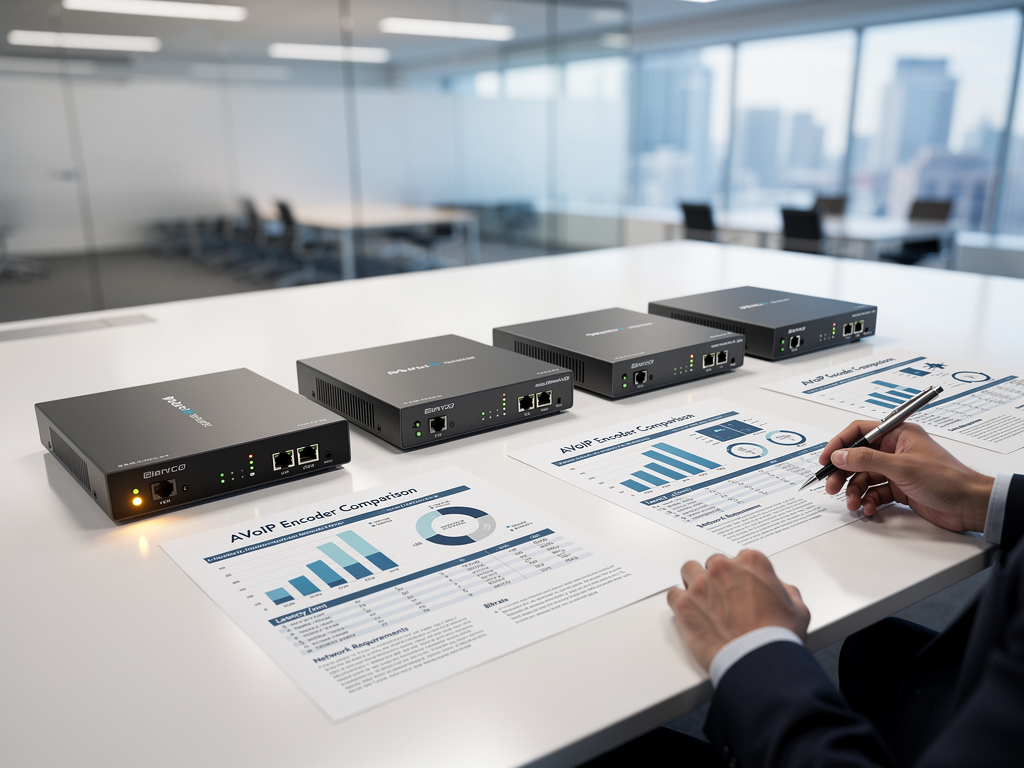
Selecting the appropriate AVoIP protocol requires careful consideration of existing infrastructure capabilities
Organizations requiring zero-latency, visually lossless transmission for applications like medical imaging, broadcast production, or high-end collaboration spaces may find SDVoE-based solutions more appropriate, though these typically require 10 Gigabit network infrastructure. The key is matching protocol capabilities to actual application requirements rather than over-specifying systems that exceed practical needs. Visionary AV and Craltech both offer solutions across multiple protocol families, providing flexibility when different areas of a facility have varying requirements.
Hybrid System Architecture Strategies
The most successful AVoIP integrations rarely involve wholesale replacement of existing systems. Instead, they employ hybrid architectures that allow traditional and IP-based systems to coexist and interoperate. This approach protects existing investments while enabling gradual migration toward fully networked AV distribution.
One common strategy involves deploying AVoIP encoders at source locations while maintaining existing display infrastructure through decoder endpoints. This approach works particularly well when existing displays and their associated cabling remain functional but the source distribution system requires expansion. For example, a corporate campus with multiple buildings can connect previously isolated AV systems through IP networking while retaining local matrix switches for room-level distribution.
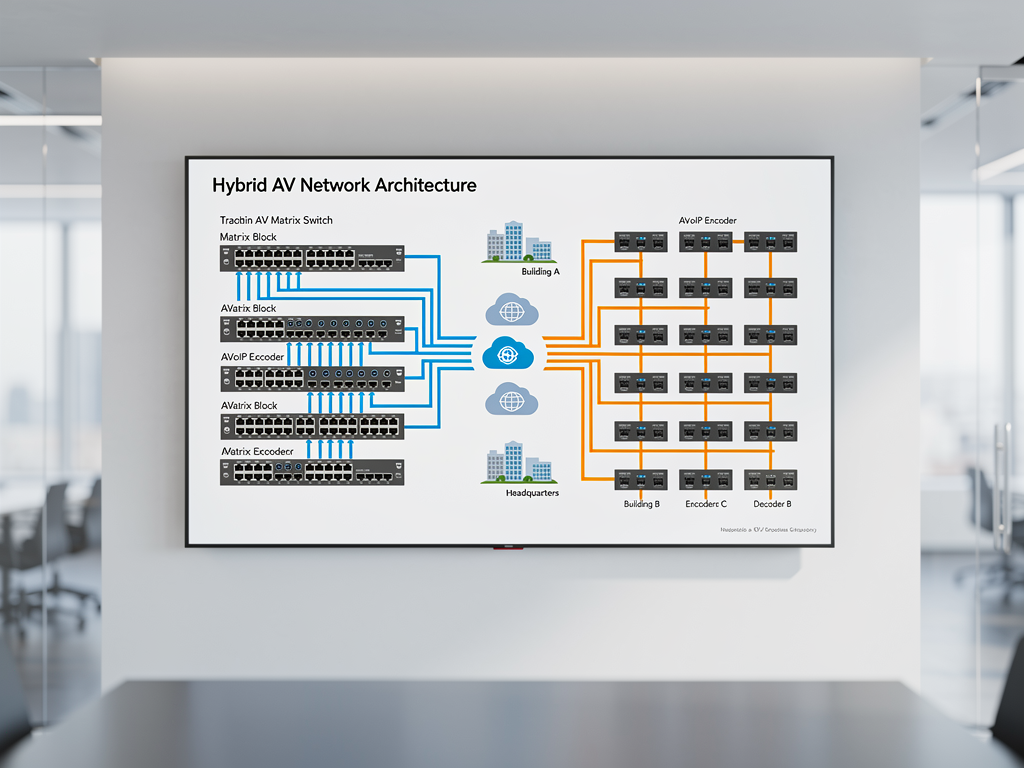
Hybrid architectures enable gradual migration while protecting existing investments
Gateway devices play a crucial role in hybrid systems, converting between traditional baseband signals and IP streams. Products from manufacturers like ADTECHNO and Netvio include models specifically designed for this bridging function, featuring both HDMI and SDI interfaces alongside network connectivity. These gateways allow legacy equipment to participate in IP-based distribution systems without requiring immediate replacement.
Control system integration represents another critical aspect of hybrid architectures. Modern AVoIP solutions typically offer API-based control interfaces that can integrate with existing Crestron, Extron, AMX, or other control platforms. This integration ensures that end users experience consistent operation regardless of whether signals travel through traditional or IP-based paths. Proper control integration also enables unified monitoring and management across the entire hybrid system.
Network Configuration Best Practices
Successful AVoIP integration depends heavily on proper network configuration. Even the most capable encoders and decoders will underperform if deployed on poorly configured networks. Implementing these best practices ensures reliable operation and simplifies troubleshooting when issues arise.
VLAN segmentation isolates AV traffic from general enterprise data, preventing bandwidth contention and simplifying quality of service implementation. Most organizations create dedicated VLANs for video streams, audio streams, and control traffic, though simpler installations may combine these onto a single AV VLAN. The key is ensuring that multicast traffic, which most AVoIP systems utilize, does not flood ports unnecessarily or consume bandwidth on network segments where it serves no purpose.

Proper VLAN configuration isolates AV traffic and ensures reliable system performance
IGMP snooping configuration requires careful attention, as improper settings represent the most common cause of AVoIP performance issues. Enable IGMP snooping on all switches carrying AV traffic, configure appropriate querier settings, and verify that multicast routing operates correctly across VLAN boundaries when necessary. Many AVoIP manufacturers, including BZBGEAR and TiGHT AV, provide detailed network configuration guides specific to their products that simplify this process.
Quality of service settings prioritize AV traffic during periods of network congestion. Configure DSCP markings on AVoIP devices and ensure that switches honor these markings with appropriate queuing policies. While a properly designed network should rarely experience congestion, QoS configuration provides insurance against unexpected traffic spikes affecting AV performance during critical presentations or events.
Phased Implementation Approaches
Implementing AVoIP integration in phases reduces risk and allows organizations to learn from each deployment stage before proceeding to the next. This approach also spreads capital expenditure over multiple budget cycles, making large-scale integration projects more financially manageable.
A typical phased approach might begin with a pilot deployment in a single conference room or small meeting space cluster. This initial phase validates equipment selection, network configuration, and control integration before broader rollout. Document everything learned during the pilot, including any configuration adjustments required and user feedback on system operation. These lessons inform subsequent phases and prevent repeating mistakes across multiple spaces.
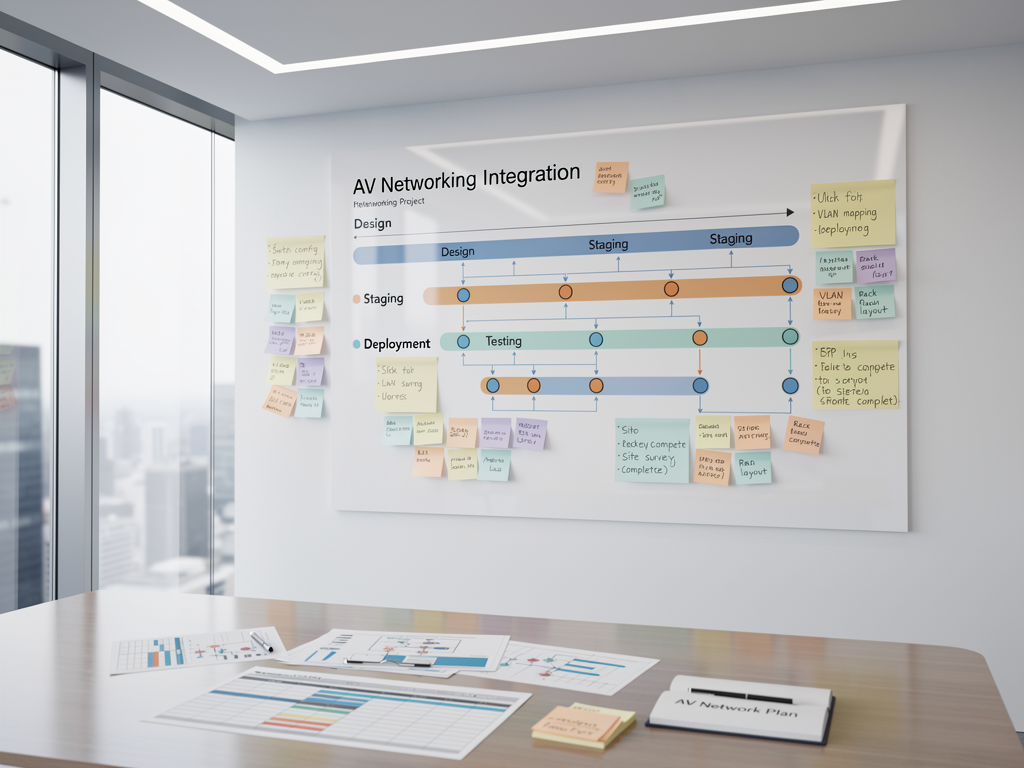
Phased implementation reduces risk and enables continuous improvement throughout the integration project
Subsequent phases typically expand coverage floor by floor or building by building, with each phase incorporating improvements identified in previous deployments. This iterative approach also allows for technology updates, as AVoIP products continue evolving rapidly. An integration project spanning multiple years might incorporate newer, more capable products in later phases while maintaining compatibility with earlier deployments.
Training should accompany each implementation phase, ensuring that both end users and technical staff understand new system capabilities. AVoIP systems often enable features impossible with traditional matrix switching, such as dynamic multiviewing, content preview, and flexible signal routing. Users who understand these capabilities derive greater value from the investment, while trained technical staff can resolve issues quickly without escalating to external support.
Cost Considerations and ROI Analysis
Understanding the true cost of AVoIP integration requires looking beyond initial equipment pricing to consider total cost of ownership. While AVoIP solutions may appear more expensive than traditional alternatives when comparing individual components, the system-level economics often favor IP-based approaches, particularly for larger installations.

Total cost of ownership analysis often reveals significant long-term savings with AVoIP solutions
Cable infrastructure represents one area where AVoIP frequently delivers cost savings. Traditional point-to-point AV distribution requires dedicated cabling between every source and destination, with costs escalating rapidly as system size increases. AVoIP systems leverage shared network infrastructure, dramatically reducing cabling requirements for large installations. Organizations with existing structured cabling infrastructure realize even greater savings by utilizing cables already in place.
Scalability economics also favor AVoIP approaches. Adding endpoints to traditional matrix systems often requires expensive frame expansion or complete system replacement. AVoIP systems scale by simply adding encoders and decoders to the network, with no practical upper limit on system size. This scalability protects against obsolescence and accommodates organizational growth without requiring system redesign. Products from Visionary AV and Craltech exemplify this scalability, offering solutions that grow from small meeting rooms to enterprise-wide deployments using consistent technology.
Future-Proofing Your Integration
Technology continues evolving, and today's integration decisions should account for tomorrow's requirements. Selecting AVoIP solutions based on open standards rather than proprietary implementations provides greater flexibility for future expansion and reduces vendor lock-in risks.

Forward-thinking integration decisions position organizations for emerging AV technologies
Network infrastructure investments should anticipate bandwidth growth. While many current AVoIP solutions operate effectively on 1 Gigabit networks, emerging standards supporting 8K resolution and higher frame rates will require 10 Gigabit or faster connectivity. Installing fiber optic backbone infrastructure during integration projects provides upgrade paths without requiring future cable replacement. Similarly, selecting managed switches with upgrade potential ensures that network infrastructure can evolve alongside AV technology.
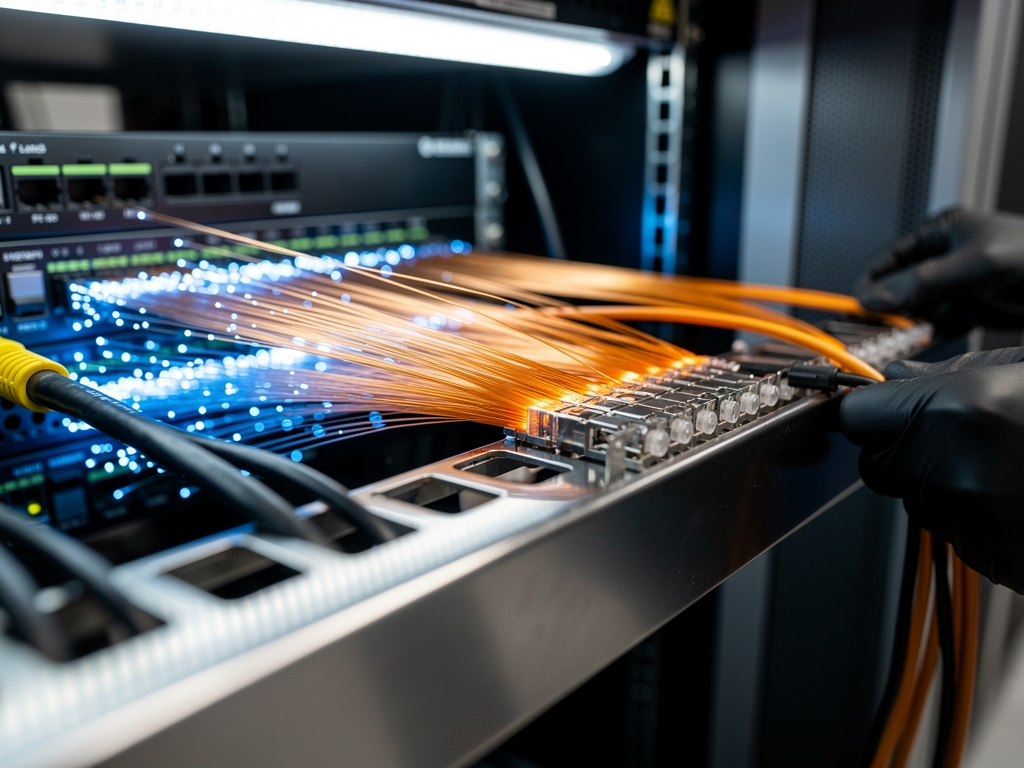
Fiber optic infrastructure provides bandwidth headroom for future technology evolution
Software-defined approaches increasingly characterize modern AVoIP systems, with functionality delivered through firmware updates rather than hardware replacement. Selecting products from manufacturers committed to ongoing development ensures that systems improve over time. The AVoIP Solutions Directory provides comprehensive information about manufacturer product roadmaps and update policies, helping integrators make informed decisions about long-term partnerships.
Conclusion: Embracing the Transition
Integrating AVoIP with existing AV infrastructure need not be overwhelming or disruptive. By conducting thorough assessments, selecting appropriate protocols, implementing hybrid architectures, and following network best practices, organizations can successfully transition toward IP-based AV distribution while protecting existing investments.

Successful AVoIP integration enables enhanced collaboration and communication capabilities
The phased approach recommended throughout this guide allows organizations to manage risk, spread costs, and continuously improve their implementations. Each phase builds upon lessons learned, resulting in increasingly refined deployments that deliver maximum value to end users.

Proper planning and execution lead to successful AVoIP integration outcomes
As AVoIP technology continues maturing, the integration challenges that seem significant today will become routine. Organizations that begin their integration journeys now position themselves advantageously for the fully networked AV future that awaits. The expertise and solutions available through manufacturers like TiGHT AV, ADTECHNO, BZBGEAR, Craltech, Netvio, and Visionary AV provide the tools needed to make this transition successfully, transforming existing AV infrastructure into flexible, scalable, and future-ready systems.
Comments(0)