Choosing AVoIP Decoders for Corporate Boardrooms: A Comprehensive Guide
Select the best AVoIP decoder for your corporate boardroom with this guide. Learn about protocols like NDI, Dante AV, and SDVoE, resolution needs, network considerations, and integration with control systems to ensure seamless presentations and future-proof your investment.
AVoIP AV Directory
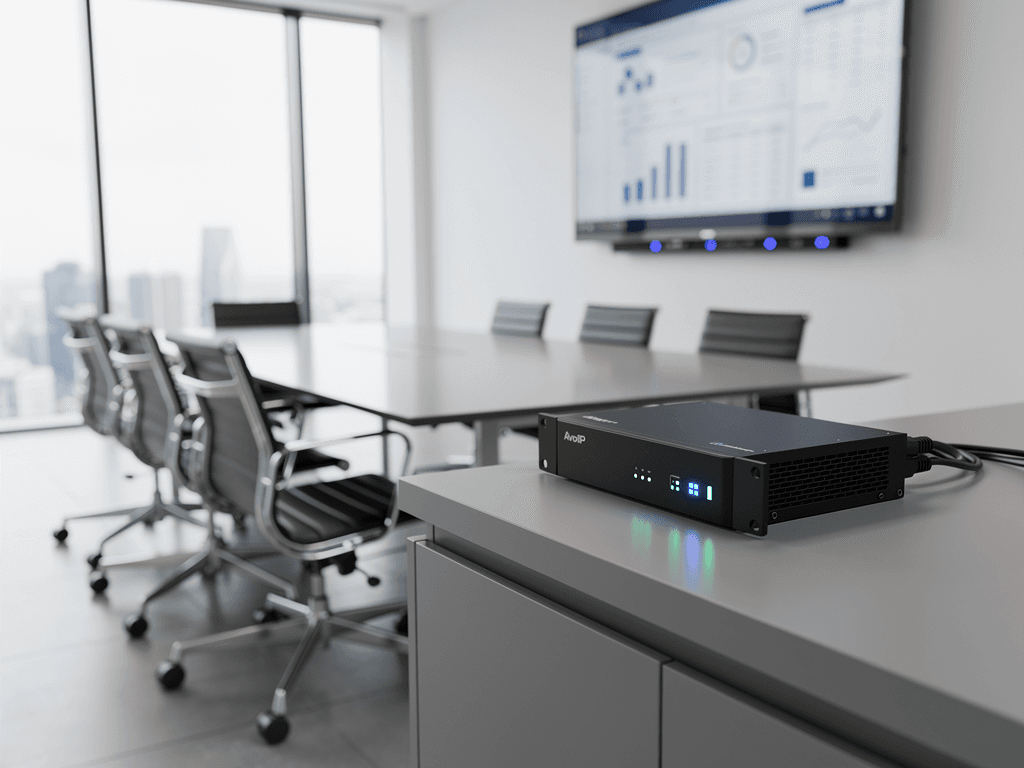
How to Choose the Right AVoIP Decoder for Your Corporate Boardroom
Selecting the appropriate AV over IP decoder for a corporate boardroom represents one of the most consequential decisions in modern meeting space design. The decoder serves as the final link between your networked video infrastructure and the display systems that executives rely upon daily. A poor choice can result in latency issues during critical presentations, compatibility headaches with existing equipment, or unnecessary expenditure on features that remain unused.
This comprehensive guide walks you through the essential considerations when evaluating AVoIP decoders for corporate environments. From understanding protocol differences to assessing scalability requirements, you will gain the knowledge necessary to make an informed purchasing decision that serves your organization for years to come.
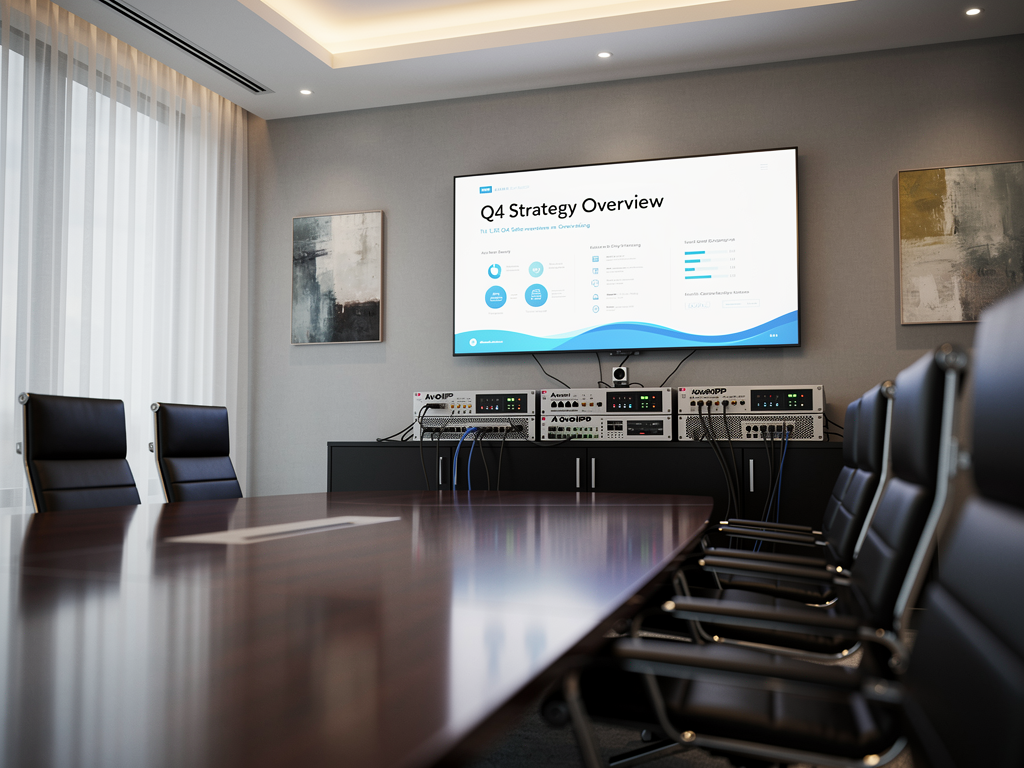
A contemporary boardroom equipped with networked AV technology for seamless presentations
Understanding AVoIP Decoder Fundamentals and Protocol Selection
Before diving into specific product comparisons, establishing a solid foundation in AVoIP decoder technology proves essential. A decoder receives compressed or uncompressed video streams transmitted over standard IP networks and converts them back into signals that displays can render. The protocol your decoder supports fundamentally shapes its capabilities, compatibility, and performance characteristics.
NDI (Network Device Interface) has emerged as a popular choice for corporate environments due to its software-based flexibility and widespread adoption. Decoders supporting NDI integrate seamlessly with production workflows and offer excellent compatibility with conferencing systems. For boardrooms that frequently host video calls or hybrid meetings, NDI-compatible decoders provide reliable performance without requiring specialized network infrastructure.
Dante AV Ultra represents another compelling option, particularly for organizations already invested in Dante audio ecosystems. This protocol delivers exceptional audio-video synchronization, which matters tremendously during presentations where timing precision affects perceived quality. Dedicated Dante AV Ultra decoders excel in these applications.
SDVoE (Software Defined Video over Ethernet) targets the most demanding corporate installations where zero-latency performance and uncompromised 4K60 quality are non-negotiable. While SDVoE decoders typically command higher price points, the investment proves worthwhile for executive boardrooms where visual fidelity directly impacts business outcomes.
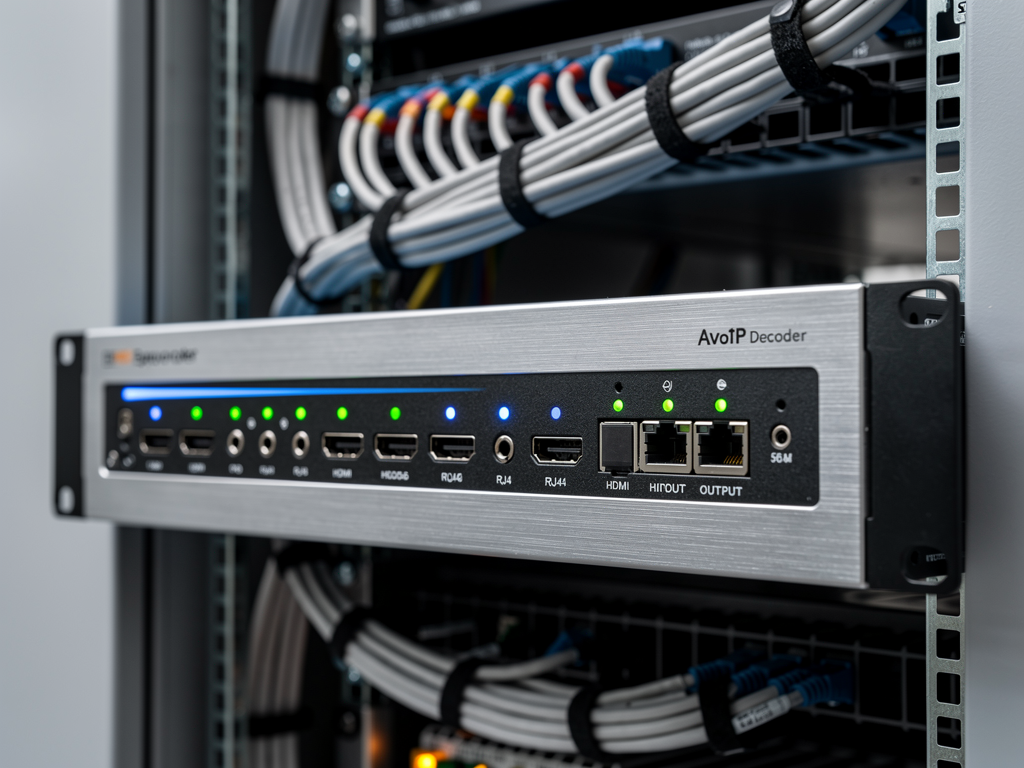
Professional-grade AVoIP decoder hardware designed for enterprise deployment
Assessing Resolution and Format Requirements
Corporate boardrooms increasingly demand 4K resolution support as display technology advances and content creators deliver higher-quality materials. When evaluating decoders, consider not only current requirements but also anticipated needs over the next five to seven years, which represents a typical refresh cycle for AV infrastructure.
A decoder rated for 4K60 (3840x2160 at 60 frames per second) provides sufficient headroom for most corporate applications. This specification ensures smooth playback of high-resolution presentations, detailed financial charts, and video content without visible stuttering or artifacts. Many decoders deliver this capability in compact form factors suitable for boardroom installations.
HDR (High Dynamic Range) support deserves consideration if your organization produces marketing materials or product demonstrations that leverage this technology. While not essential for typical spreadsheet presentations, HDR capability future-proofs your investment as content standards evolve.
Color depth and chroma subsampling specifications also warrant attention. For text-heavy content common in corporate settings, 4:4:4 chroma subsampling preserves sharp edges around characters and fine details in diagrams. Decoders that only support 4:2:0 subsampling may produce visible artifacts around text, which proves distracting during extended presentations.

Visual comparison highlighting the importance of proper resolution and chroma support for text clarity
Network Infrastructure Considerations and Bandwidth Planning
The decoder you select must harmonize with your existing network infrastructure or inform necessary upgrades. This consideration often receives insufficient attention during the selection process, leading to disappointing performance after installation.
Gigabit Ethernet connectivity serves as the minimum requirement for most AVoIP decoders handling 4K content. However, uncompressed 4K60 streams demand 10 Gigabit connections, which influences both decoder selection and switch infrastructure. Many manufacturers engineer their products to optimize bandwidth utilization through intelligent compression, reducing infrastructure requirements without sacrificing quality.
IGMP (Internet Group Management Protocol) snooping capability on your network switches proves essential for multicast AVoIP deployments. Without proper IGMP configuration, video streams flood all switch ports rather than reaching only intended destinations, consuming bandwidth and potentially disrupting other network traffic. Ensure your IT team understands these requirements before deployment.
Quality of Service (QoS) configuration prioritizes video traffic over less time-sensitive data. Work with your network administrators to establish appropriate DSCP markings and queue configurations that protect video streams during periods of network congestion. Many enterprise switches support automatic QoS for recognized AVoIP protocols, simplifying this configuration.
VLAN segmentation isolates AV traffic from general corporate network activity, improving both performance and security. Decoders should support VLAN tagging to participate in these segmented networks properly. This architectural approach also simplifies troubleshooting by containing AV-related issues within a defined network segment.
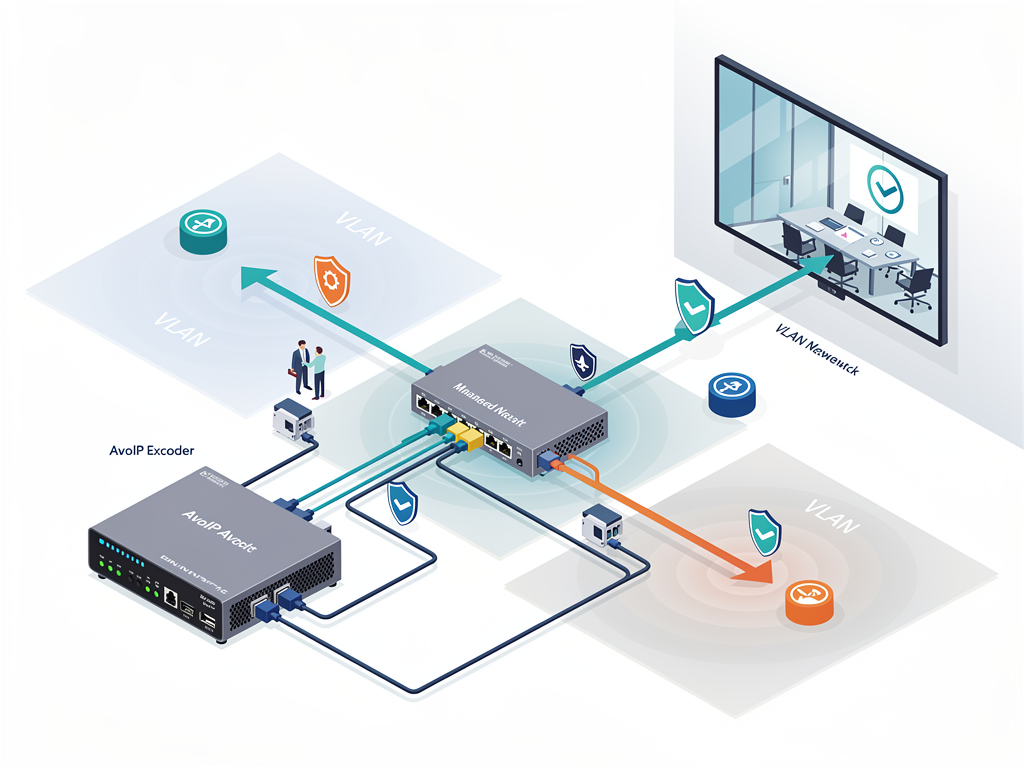
Network architecture diagram illustrating proper AVoIP deployment with VLAN segmentation
Integration Capabilities and Control System Compatibility
Corporate boardrooms rarely operate as standalone systems. Your decoder must integrate with room control systems, scheduling platforms, and unified communications infrastructure to deliver the seamless experience executives expect.
Control system compatibility ranks among the most critical integration considerations. Major platforms including Crestron, Extron, AMX, and Control4 require specific API support or driver availability. Many manufacturers provide comprehensive control system integration documentation and pre-built modules that accelerate deployment. Verify that your preferred decoder offers native support for your existing control infrastructure before finalizing your selection.
RS-232 and IP control interfaces provide flexibility in how the decoder receives commands. While IP control offers greater sophistication and bidirectional feedback, RS-232 remains valuable for legacy system integration. The best decoders support both interfaces simultaneously, accommodating diverse installation requirements.
USB connectivity for keyboard, video, and mouse (KVM) extension enables remote computer control through the AVoIP system. This capability proves invaluable when presenters need to interact with computers located in equipment rooms rather than the boardroom itself. Many decoders incorporate USB extension alongside video decoding, consolidating multiple functions into single devices.
Audio de-embedding and output options determine how the decoder handles sound. Analog audio outputs accommodate legacy amplification systems, while digital outputs (HDMI ARC, S/PDIF, or Dante) integrate with modern audio distribution. Ensure the decoder provides appropriate outputs for your existing audio infrastructure.
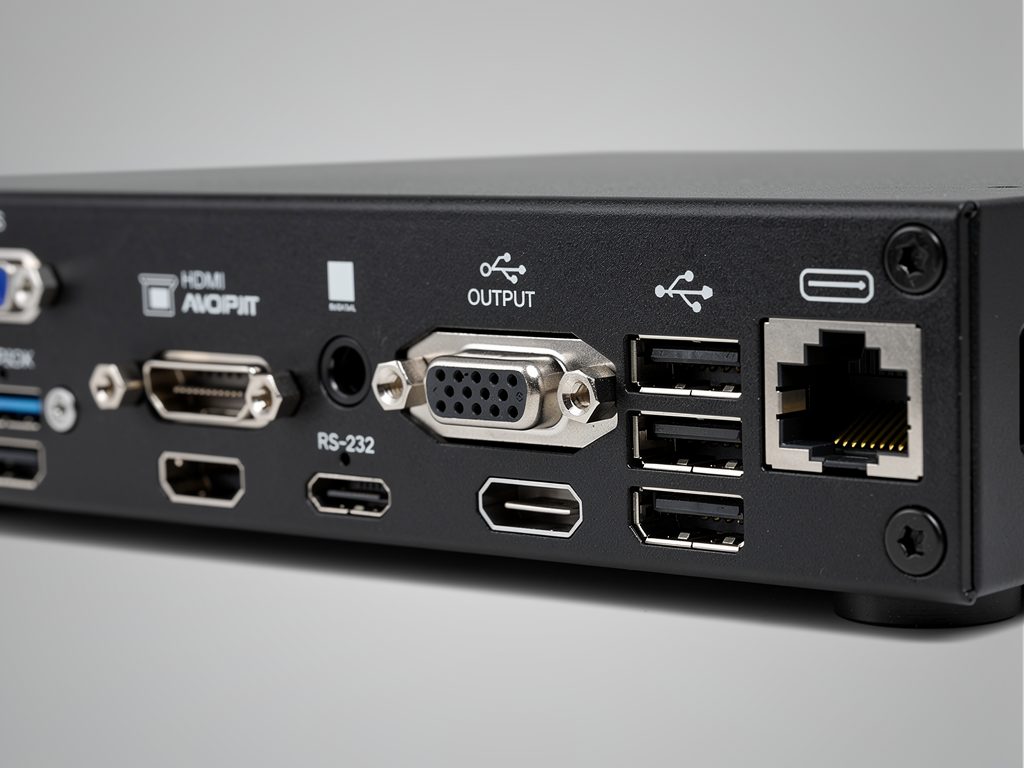
Comprehensive connectivity options on a professional AVoIP decoder
Reliability, Redundancy, and Support Considerations
Boardroom AV failures during important meetings create memorable negative impressions. Selecting decoders engineered for reliability and backed by responsive support minimizes these risks.
Thermal management design directly impacts long-term reliability. Fanless decoders eliminate a common failure point while maintaining silent operation appropriate for quiet meeting environments. Examine specifications for operating temperature ranges and ensure adequate ventilation in your installation location. Many decoders demonstrate thoughtful thermal engineering that supports continuous operation in enclosed spaces.
Firmware update policies from manufacturers affect security and feature evolution over your ownership period. Vendors committed to ongoing development release regular updates addressing vulnerabilities and adding capabilities. Investigate the manufacturer's track record for supporting products throughout their lifecycle before purchasing.
Warranty terms and technical support accessibility vary significantly between manufacturers. Enterprise-focused vendors typically offer multi-year warranties with advance replacement options that minimize downtime. Evaluate support hours, response time commitments, and available support channels when comparing products at similar price points.
Redundancy options protect against single points of failure in mission-critical boardrooms. Some AVoIP systems support automatic failover between primary and backup decoders, ensuring presentations continue even if hardware fails. While this capability adds cost, the investment proves worthwhile for spaces hosting board meetings or investor presentations.
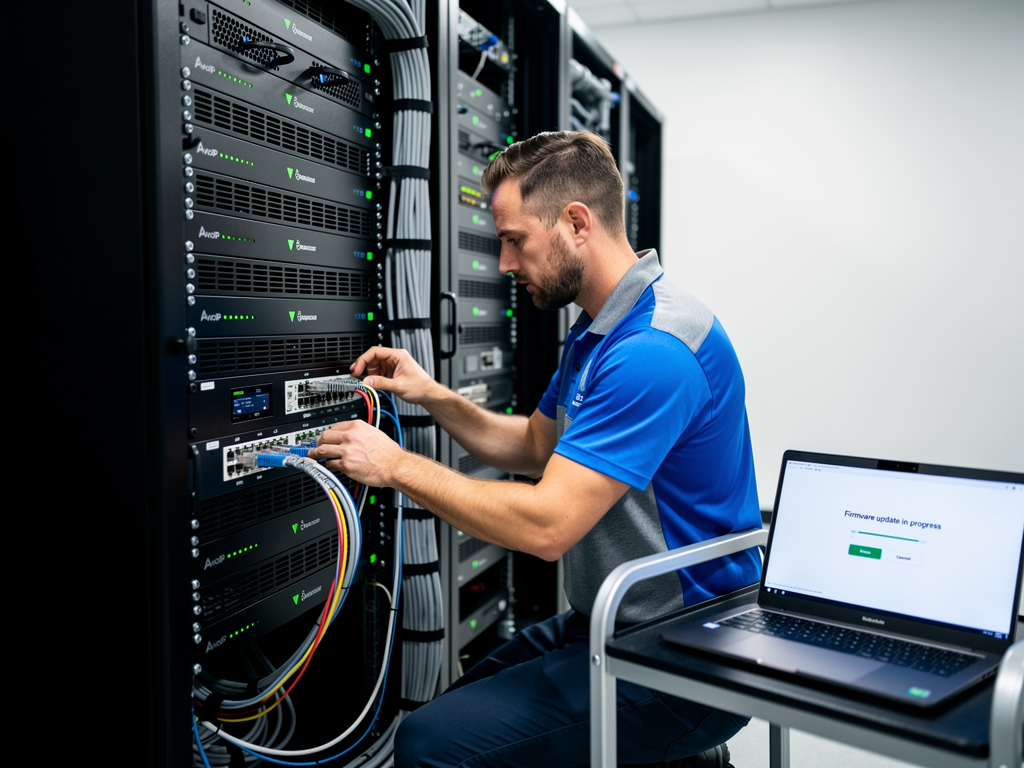
Professional maintenance ensures long-term reliability of AVoIP infrastructure
Cost Analysis and Total Ownership Evaluation
Purchase price represents only one component of decoder ownership costs. A thorough evaluation considers installation, configuration, training, maintenance, and eventual replacement expenses.
Initial hardware costs for quality boardroom decoders typically range from $500 to $3,000 depending on capabilities and protocol support. Entry-level units from reputable manufacturers provide excellent value for standard corporate applications. Premium decoders supporting zero-latency protocols or advanced features command higher prices but deliver measurable performance benefits.
Installation complexity affects labor costs significantly. Decoders with intuitive web interfaces and auto-discovery capabilities reduce configuration time compared to units requiring command-line setup. PoE (Power over Ethernet) support eliminates separate power supply requirements, simplifying installation and reducing potential failure points.
Software licensing models deserve scrutiny during evaluation. Some manufacturers include all features in the hardware price, while others require ongoing subscriptions for advanced capabilities or cloud management features. Calculate total five-year costs including any recurring fees when comparing options.
Training requirements for your AV support staff influence operational costs. Decoders from manufacturers with comprehensive documentation, video tutorials, and certification programs reduce the learning curve and improve troubleshooting efficiency.
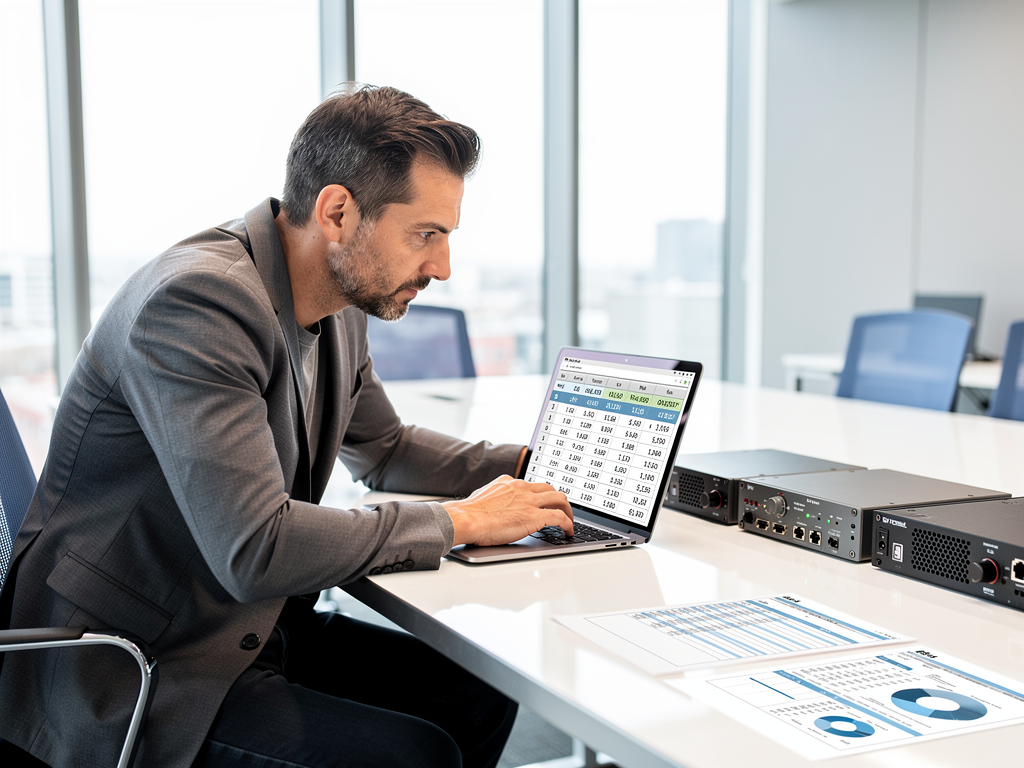
Careful cost analysis ensures optimal return on AVoIP investment
Scalability Planning for Future Expansion
Corporate AV needs evolve as organizations grow and meeting patterns change. Selecting decoders that accommodate future expansion protects your initial investment and simplifies subsequent projects.
Protocol flexibility enables integration with diverse source devices as your AVoIP ecosystem expands. Decoders supporting multiple protocols or offering firmware-upgradable protocol support adapt to changing requirements without hardware replacement. This flexibility proves particularly valuable as new standards emerge and gain adoption.
Centralized management platforms simplify administration as decoder counts increase. Manufacturers offering unified management software enable configuration, monitoring, and troubleshooting across dozens or hundreds of endpoints from single interfaces. Evaluate management capabilities early, even if your initial deployment includes only a few decoders.
Interoperability with products from multiple manufacturers prevents vendor lock-in and ensures competitive pricing for future purchases. Standards-based protocols like NDI and Dante AV promote interoperability, while proprietary solutions may limit your options. Balance the performance benefits of proprietary systems against the flexibility of open standards when making your selection.

Enterprise-scale AVoIP deployments require careful scalability planning
Making Your Final Selection
Armed with understanding across these evaluation dimensions, you can now approach decoder selection with confidence. Begin by documenting your specific requirements across resolution, protocol, integration, and reliability categories. Weight these requirements according to your organization's priorities.
Request demonstrations from shortlisted manufacturers, ideally in environments similar to your boardroom. Hands-on evaluation reveals user interface quality, switching speed, and image characteristics that specifications alone cannot convey. Reputable manufacturers welcome these evaluation opportunities and provide loaner equipment for qualified projects.
Consult with experienced AV integrators who have deployed various decoder products in corporate environments. Their practical insights regarding reliability, support responsiveness, and real-world performance complement manufacturer claims with field-tested observations.
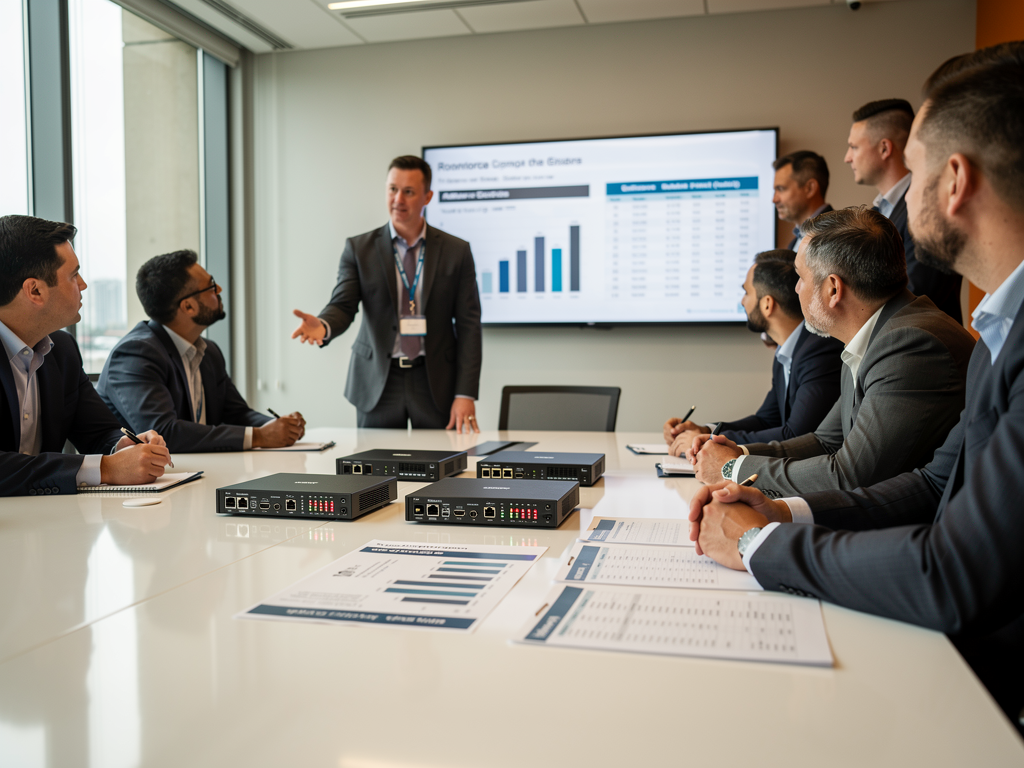
Collaborative evaluation process leads to optimal decoder selection
Document your selection rationale thoroughly. This documentation proves valuable during future expansion projects, troubleshooting sessions, and eventual replacement planning. Include not only what you selected but why alternatives were rejected, preserving institutional knowledge for colleagues who may manage the system years from now.

A well-chosen AVoIP decoder enables seamless corporate communications
The right AVoIP decoder transforms your boardroom into a powerful communication hub that serves your organization reliably for years. By methodically evaluating protocols, performance specifications, integration capabilities, and total ownership costs, you position yourself to make a selection that satisfies current requirements while accommodating future growth. The investment in thorough evaluation pays dividends through reduced operational issues, simplified maintenance, and confident presentations that reflect well on your organization.
If the information in this article was relevant, please visit https://avoip.av-directory.com, use the filters, and find the brand that is most suitable for you.
Comments(0)