AVoIP Latency: NDI, SDVoE, Dante AV, & IPMX Compared
Explore a comprehensive analysis of latency across major AVoIP protocols like NDI, SDVoE, Dante AV, and IPMX to make informed decisions for professional AV installations. Understand how different protocols impact signal delay for live production, corporate boardrooms, and control centers.
AVoIP AV Directory
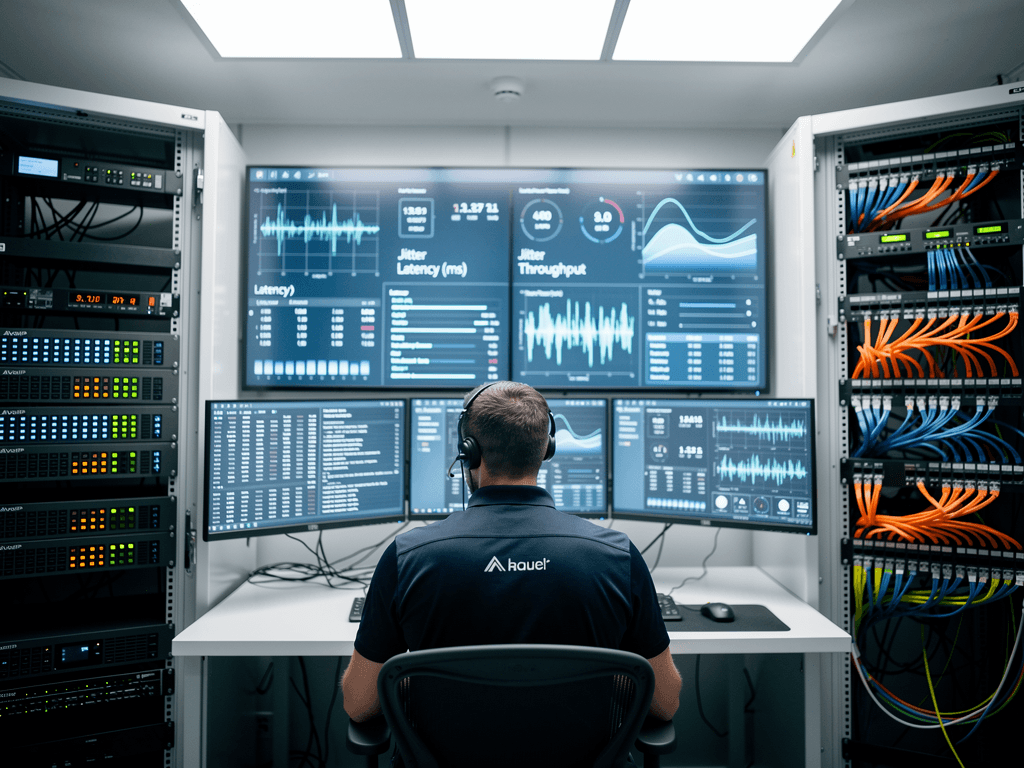
Comparing Latency Specifications Across AVoIP Protocols: NDI, SDVoE, Dante AV, IPMX
Latency remains one of the most critical performance metrics when selecting an AV over IP solution for professional installations. Whether you are deploying a live production environment, a corporate boardroom, or a command and control center, understanding how different protocols handle signal delay can mean the difference between seamless operation and frustrating user experiences. This comprehensive analysis examines the latency characteristics of four major AVoIP protocols, helping integrators and end users make informed decisions based on real-world performance requirements.
Understanding Latency in AV over IP Systems
Before diving into protocol comparisons, it is essential to establish what latency means in the context of networked audio and video distribution. Latency refers to the time delay between a signal entering an encoder and appearing at the decoder output. This delay encompasses multiple stages including capture, compression, packetization, network transit, buffering, decompression, and output processing. Each protocol approaches these stages differently, resulting in vastly different latency profiles.
The importance of low latency varies significantly by application. Live production environments demand sub-frame delays to maintain lip sync and enable real-time switching. Interactive applications such as gaming or video conferencing require latency below human perception thresholds, typically under 100 milliseconds. Digital signage and passive viewing scenarios can tolerate higher delays without impacting user experience. Understanding your specific use case requirements helps narrow down which protocol best serves your needs.

Network infrastructure also plays a crucial role in achieved latency. Switch hop counts, buffer configurations, and traffic prioritization all contribute to end-to-end delay. Protocols designed for standard gigabit networks face different constraints than those requiring dedicated 10-gigabit infrastructure. The total cost of ownership must factor in both equipment expenses and network upgrade requirements when evaluating latency specifications.
NDI Latency Characteristics and Performance
NewTek's Network Device Interface, commonly known as NDI, has become ubiquitous in software-based production environments. The protocol operates over standard gigabit Ethernet networks using a combination of compression techniques to balance quality against bandwidth consumption. NDI's latency profile varies considerably depending on the implementation mode and network conditions.
Standard NDI typically exhibits latency between 2 and 4 frames at 1080p60, translating to approximately 33 to 66 milliseconds. This delay stems primarily from the compression algorithm and buffering requirements needed to ensure reliable delivery over congested networks. For many production workflows, this latency remains acceptable, particularly when all sources share similar delay characteristics.
NDI|HX represents a higher compression variant designed for bandwidth-constrained environments. This mode introduces additional latency, often reaching 100 to 200 milliseconds due to more aggressive encoding. While unsuitable for live switching applications, NDI|HX serves well for contribution feeds and monitoring purposes where absolute minimum delay is not critical.
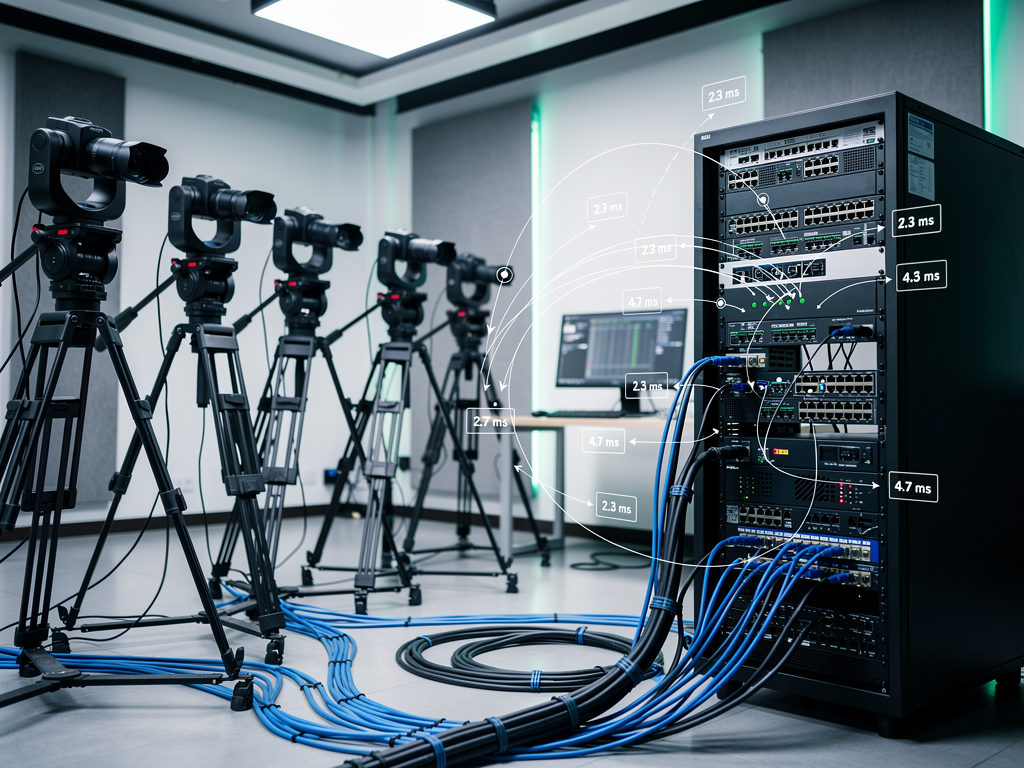
Hardware-based NDI encoders and decoders from manufacturers like BZBGEAR and their AVoIP product lineup can achieve lower latency than software implementations by offloading processing to dedicated silicon. These solutions often reach the lower end of the NDI latency spectrum while maintaining compatibility with the broader NDI ecosystem.
SDVoE: Zero-Frame Latency for Mission-Critical Applications
The Software Defined Video over Ethernet alliance developed SDVoE specifically to address the latency limitations of compressed protocols. By transmitting uncompressed or visually lossless video over 10-gigabit Ethernet infrastructure, SDVoE achieves what the industry terms "zero-frame latency," meaning delay under one frame duration regardless of resolution.
In practical measurements, SDVoE systems typically demonstrate latency between 100 microseconds and 1 millisecond for video transport. This performance approaches that of traditional baseband matrix switchers while providing the flexibility and scalability of IP-based distribution. For applications requiring instantaneous response, such as live event production, medical imaging, or simulation environments, SDVoE remains the benchmark.
The trade-off for this exceptional latency performance comes in infrastructure requirements. SDVoE mandates 10-gigabit network connectivity throughout the signal path, with careful attention to switch selection and configuration. Not all 10GbE switches provide the consistent forwarding performance needed for reliable SDVoE operation. The AVoIP Solutions Directory provides detailed specifications for compatible network equipment and endpoint devices.

Manufacturers including TiGHT AV and Craltech offer SDVoE-based solutions that combine ultra-low latency with practical features like built-in scaling and audio embedding. These products demonstrate that zero-frame performance need not compromise system functionality or ease of deployment.
Dante AV: Leveraging Proven Audio Network Technology
Audinate's Dante AV extends the company's dominant audio networking technology into the video domain. Building on years of refinement in professional audio applications, Dante AV brings predictable, synchronized media transport to combined audio and video workflows. The protocol offers two distinct modes with different latency characteristics.
Dante AV Ultra targets applications requiring the highest quality and lowest latency. Using JPEG 2000 compression with dedicated hardware processing, Dante AV Ultra achieves latency specifications between 3 and 17 milliseconds depending on configuration. This performance suits live production, houses of worship, and corporate environments where both audio and video must remain tightly synchronized.
The standard Dante AV mode provides more bandwidth-efficient operation suitable for distribution over standard gigabit networks. Latency in this mode typically ranges from 50 to 100 milliseconds, positioning it well for digital signage, overflow rooms, and monitoring applications. The ability to mix both modes within a single Dante ecosystem provides flexibility in system design.
Visionary AV and ADTECHNO have embraced Dante AV technology in their product portfolios, recognizing the protocol's strength in environments where audio quality and synchronization take priority. Their encoder and decoder solutions integrate seamlessly with existing Dante audio infrastructure, simplifying deployment for facilities already invested in the ecosystem.
IPMX: The Emerging Open Standard
The IPMX initiative represents the professional AV industry's effort to establish an open, interoperable standard for media over IP. Built upon SMPTE ST 2110 foundations adapted for ProAV requirements, IPMX promises vendor-neutral compatibility while delivering competitive latency performance. As an emerging standard, real-world deployment data continues to accumulate.
Early IPMX implementations demonstrate latency characteristics comparable to SDVoE when operating in uncompressed mode over 10-gigabit networks. The specification also accommodates compressed transport using JPEG XS, which introduces modest additional delay while dramatically reducing bandwidth requirements. JPEG XS compression typically adds 1 to 4 milliseconds to the transport chain.
The open nature of IPMX encourages innovation from multiple manufacturers without licensing constraints. Netvio and other forward-thinking brands have announced IPMX development efforts, recognizing the standard's potential to unify the fragmented AVoIP landscape. As the ecosystem matures, integrators can expect broader product selection and competitive pricing.
Network requirements for IPMX vary based on the chosen transport mode. Uncompressed 4K60 signals demand 10-gigabit connectivity similar to SDVoE, while JPEG XS compressed streams can operate effectively over well-configured gigabit infrastructure. This flexibility allows system designers to balance latency requirements against infrastructure investment.
Protocol Comparison and Selection Guidance
Selecting the appropriate AVoIP protocol requires careful consideration of latency requirements alongside other factors including bandwidth availability, existing infrastructure, and budget constraints. The following comparison summarizes typical latency specifications across protocols:
SDVoE consistently delivers the lowest latency at under 1 millisecond, making it the clear choice for applications where instantaneous response is non-negotiable. The requirement for 10-gigabit infrastructure represents a significant investment but ensures headroom for future expansion.
Dante AV Ultra occupies a middle ground with 3 to 17 millisecond latency that satisfies most live production requirements while offering superior audio synchronization capabilities. Organizations with existing Dante audio infrastructure benefit from ecosystem integration.

NDI provides the most accessible entry point with software-based implementation options and gigabit network compatibility. Latency between 33 and 66 milliseconds serves production environments well, though higher compression modes introduce additional delay.
IPMX offers flexibility through multiple transport options, with latency ranging from sub-millisecond uncompressed to single-digit milliseconds with JPEG XS compression. The open standard approach ensures long-term interoperability and competitive market dynamics.
Practical Implementation Considerations
Beyond raw protocol specifications, real-world latency depends heavily on implementation quality and network configuration. Encoder and decoder hardware from established manufacturers like TiGHT AV and BZBGEAR undergoes rigorous optimization to achieve specified performance. Budget-oriented alternatives may introduce additional processing delays that compromise the protocol's inherent capabilities.
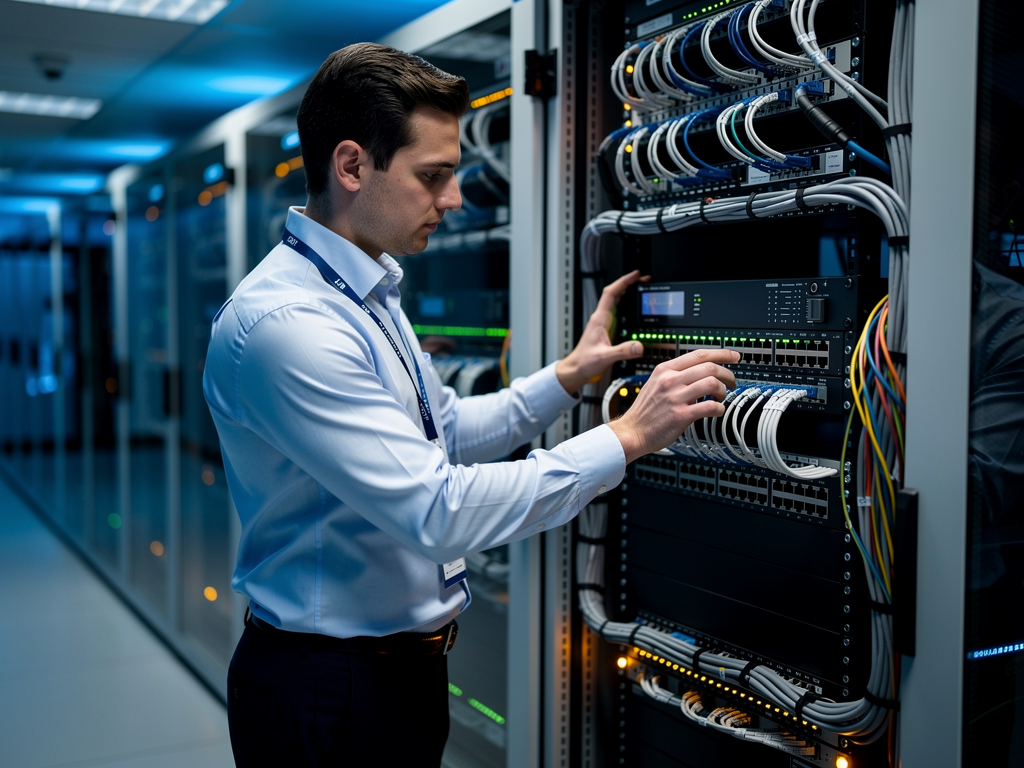
Network switch selection significantly impacts achieved latency. Cut-through switching architectures minimize forwarding delay compared to store-and-forward designs. Quality of Service configurations must prioritize AV traffic to prevent congestion-induced delays. The comprehensive AVoIP product database includes network compatibility information to guide infrastructure decisions.
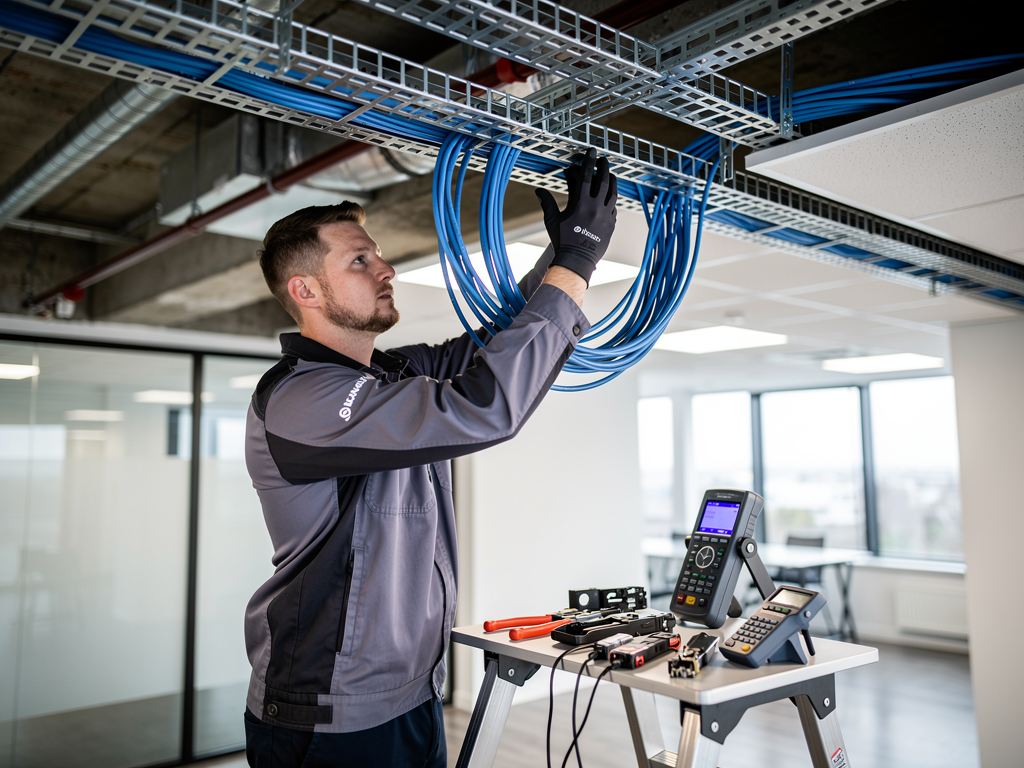
Testing and verification should occur during commissioning to confirm latency meets project requirements. Specialized measurement tools can capture end-to-end delay with frame accuracy, identifying any unexpected bottlenecks. Documentation of achieved performance provides valuable reference for troubleshooting and future system modifications.

As AVoIP technology continues evolving, latency specifications will likely improve across all protocols. Hardware acceleration, algorithm refinement, and network technology advancement all contribute to ongoing performance gains. Selecting solutions from manufacturers committed to firmware updates ensures installations benefit from these improvements over their operational lifetime.

The AVoIP industry offers solutions for virtually every latency requirement, from sub-millisecond SDVoE installations to bandwidth-efficient NDI deployments. By understanding the fundamental trade-offs between protocols and carefully evaluating application needs, integrators can confidently specify systems that deliver reliable, responsive performance for years to come.
Comments(0)